Raja Kelkar Museum Preserving India's Artistic Soul for the World

Raja Kelkar Museum

Preserving India's Artistic Soul for the World

Latest Articles

The Handmade Object as Cultural Counterpoint: Why Indian Craft Has Become America's Quiet Protest
Art & Culture

The Handmade Object as Cultural Counterpoint: Why Indian Craft Has Become America's Quiet Protest

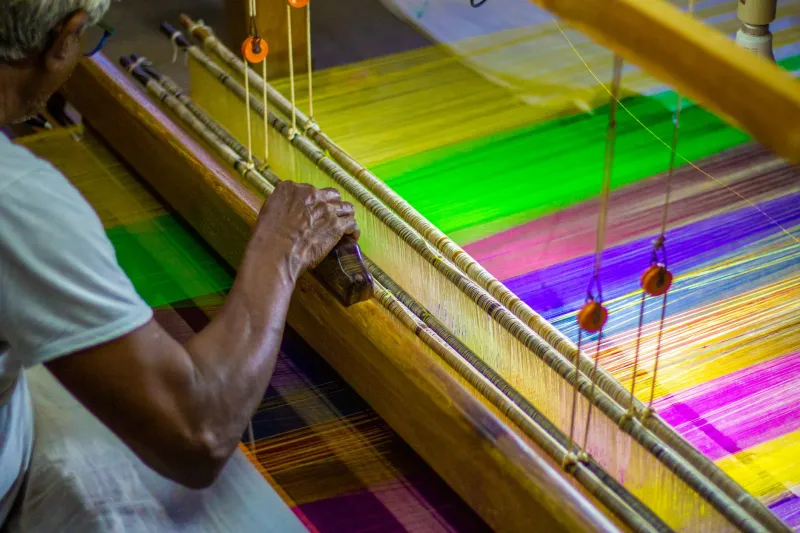
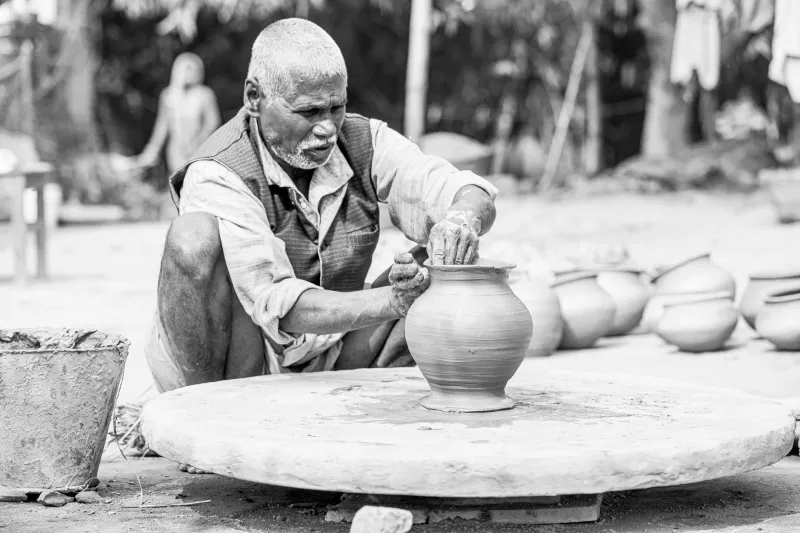
Among a growing cohort of American collectors, Indian handmade objects have taken on a significance that extends well beyond decoration. In an economy defined by algorithmic production and disposable goods, these objects carry a counter-narrative: they are slow, human, irreplaceable, and embedded in communities of meaning that mass manufacturing cannot simulate. This essay examines how Raja Kelkar's collecting vision has become, perhaps unexpectedly, a touchstone for an American generation redef

Reading the Maker's Hand: A Collector's Field Guide to Authenticating Indian Handicrafts
History & Legacy

Reading the Maker's Hand: A Collector's Field Guide to Authenticating Indian Handicrafts

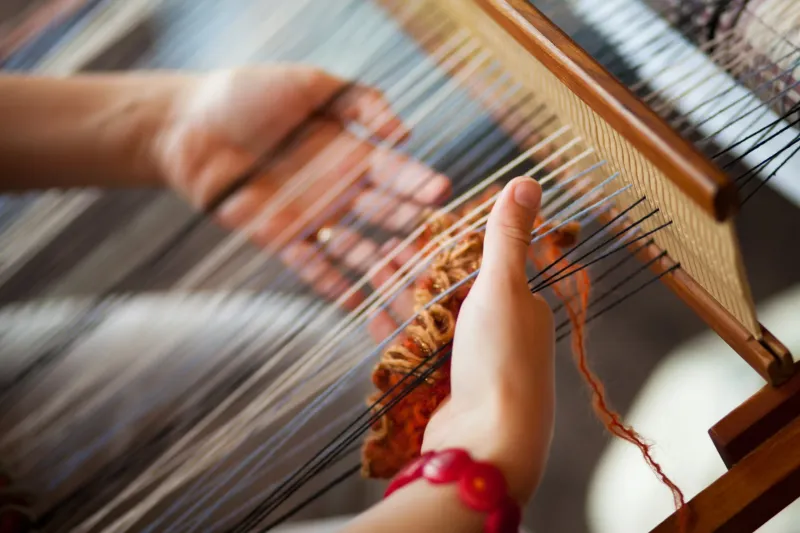
As Indian handmade objects find their way into American collections, the ability to distinguish authentic artisan-made work from machine-produced imitation has never been more consequential. This practical guide draws on the material evidence embedded in genuine handicrafts—from tool marks and fiber irregularities to regional construction conventions—to help collectors identify which community's hands shaped a given piece. The knowledge required to make these distinctions is itself endangered, m

From Storage to Story: The Cultural Shift Turning American Homes Into Personal Galleries
Art & Culture

From Storage to Story: The Cultural Shift Turning American Homes Into Personal Galleries

A profound change is underway in how Americans relate to the objects they keep. Driven by minimalism fatigue, social media exposure, and a growing hunger for meaning, a new generation of homeowners is borrowing from museum practice to transform their living spaces into intentional, curated environments. Raja Kelkar's lifelong philosophy of purposeful collecting offers a compelling blueprint for this emerging aesthetic.

The Art of the Small Room: Translating Museum Spatial Intelligence Into the Urban American Apartment
Art & Culture

The Art of the Small Room: Translating Museum Spatial Intelligence Into the Urban American Apartment

The galleries of the Raja Kelkar Museum in Pune accomplish something that challenges most assumptions about how space and collection relate: they make constraint feel expansive, and density feel coherent. For the millions of Americans navigating the design challenges of urban apartments and compact homes, the curatorial decisions embedded in those galleries offer a surprisingly practical set of principles. This analysis deconstructs the museum's spatial strategies room by room and translates the

Restraint as Rebellion: How Radical Selectivity Is Redefining Status Among America's Most Discerning Collectors
Art & Culture

Restraint as Rebellion: How Radical Selectivity Is Redefining Status Among America's Most Discerning Collectors

A quiet but consequential shift is occurring in the homes of America's wealthiest households, where the deliberate refusal to acquire more has become the ultimate expression of cultural sophistication. Drawing on the collecting philosophy of Raja Dinkar Kelkar, contemporary collectors and designers are discovering that restraint—long dismissed as antithetical to American ambition—carries a depth of meaning that accumulation never could. The Raja Kelkar Museum examines what this psychological tra

Tracing the Hand: A Practical Guide to Uncovering the Artisan Origins of Your Family's Indian Heirlooms
History & Legacy

Tracing the Hand: A Practical Guide to Uncovering the Artisan Origins of Your Family's Indian Heirlooms

Millions of American households contain inherited Indian textiles, metalwork, and ceramics whose true origins—the specific region, tradition, and craftsperson responsible for their creation—have been lost to time and incomplete family histories. This guide offers a structured methodology for recovering those origins, drawing on the research resources of the Raja Kelkar Museum and the expertise of scholars, conservators, and provenance specialists. Through the stories of families who undertook th

Depth Over Volume: What India's Most Selective Collector Understood That American Culture Has Yet to Learn
Art & Culture

Depth Over Volume: What India's Most Selective Collector Understood That American Culture Has Yet to Learn

Raja Kelkar's approach to building one of India's most significant museum collections was never about quantity — it was about resonance. For American audiences accustomed to the rewards of accumulation, his philosophy offers a quietly radical alternative: that genuine understanding of art and culture begins precisely where consumption ends.

Fewer, Better: The Radical Collecting Wisdom That Built One of India's Greatest Museums
Art & Culture

Fewer, Better: The Radical Collecting Wisdom That Built One of India's Greatest Museums

In an era defined by accumulation, Raja Kelkar's approach to building a collection of 36,000 objects offers a surprising lesson: restraint and intention matter far more than volume. This piece examines how American collectors can find deeper meaning — and greater impact — by choosing fewer objects with greater purpose.

Reading What the Maker Left Behind: A Method for Decoding Indian Craft Through Its Objects
Art & Culture

Reading What the Maker Left Behind: A Method for Decoding Indian Craft Through Its Objects

Long before an American collector ever sets foot in a workshop or speaks with a living artisan, the objects themselves are already speaking. Raja Kelkar's curatorial framework offers a disciplined methodology for developing genuine literacy in traditional Indian craftsmanship—by learning to listen with the eyes. This guide explores how careful, systematic observation of finished artifacts can unlock centuries of regional technique, cultural intent, and maker's logic.

Order Beneath the Ornament: The Mathematical Intelligence Encoded in India's Everyday Objects
Art & Culture

Order Beneath the Ornament: The Mathematical Intelligence Encoded in India's Everyday Objects

Beneath the surface beauty of traditional Indian decorative arts lies a rigorous mathematical architecture that Western audiences have largely failed to recognize. The collection at Raja Kelkar Museum in Pune offers a rare opportunity to examine how ancient Indian artisans embedded geometric precision, symmetry theory, and numerical logic into the functional objects of daily life. Understanding this hidden structure fundamentally challenges the assumption that mathematical sophistication and art

From Decoration to Declaration: How Museum Display Logic Is Entering the American Home
Art & Culture

From Decoration to Declaration: How Museum Display Logic Is Entering the American Home

A quiet but significant shift is underway in how Americans think about the objects they live with. Inspired by institutions that treat everyday artifacts with the same gravity as fine art, a growing number of homeowners are abandoning the language of decoration in favor of something more deliberate—and more meaningful.

When America Was Ready: How Shifting Values Opened the Door to Raja Kelkar's Collecting Vision
Art & Culture

When America Was Ready: How Shifting Values Opened the Door to Raja Kelkar's Collecting Vision

Something has changed in the American cultural landscape—a growing weariness with disposability, a hunger for objects that carry genuine meaning, and a renewed respect for the handmade and the intentional. These shifts, decades in the making, have created an unexpected but entirely natural audience for the philosophy behind Raja Kelkar Museum's extraordinary 36,000-object collection.

Curated Living: How Museum Display Principles Are Transforming the American Home
Art & Culture

Curated Living: How Museum Display Principles Are Transforming the American Home

A quiet but significant shift is underway in American homes, where homeowners are abandoning cluttered surfaces in favor of intentional, museum-quality arrangements that give each object room to breathe and speak. Drawing inspiration from institutions like Raja Kelkar Museum in Pune, this movement reframes the domestic interior as a curated space where meaning, memory, and aesthetic discipline converge. The result is not merely a design trend but a fundamental rethinking of how Americans relate

What a Pune Museum Is Teaching Americans About the Homes They Already Live In
Art & Culture

What a Pune Museum Is Teaching Americans About the Homes They Already Live In

A growing number of American collectors and design enthusiasts are making deliberate journeys to Raja Kelkar Museum in Pune, India — not merely as tourists, but as students of a radically different way of understanding domestic space. What they find there is quietly transforming how they think about the objects they live alongside every day.

From Pune to Portland: How One Indian Museum Is Quietly Reshaping American Collecting Culture
Art & Culture

From Pune to Portland: How One Indian Museum Is Quietly Reshaping American Collecting Culture

A growing number of American collectors are returning home from Pune's Raja Kelkar Museum fundamentally changed — not merely inspired, but compelled to reconsider everything they thought they knew about why objects matter. What happens when a single visit dismantles decades of acquisition habits and replaces them with something more intentional, more human, and more enduring?

Curating a Life: What Raja Kelkar's Philosophy Can Teach American Homeowners About Collecting With Intention
Art & Culture

Curating a Life: What Raja Kelkar's Philosophy Can Teach American Homeowners About Collecting With Intention

The Raja Kelkar Museum's extraordinary collection of 36,000 objects was never assembled for spectacle—it was built on the conviction that everyday things, chosen with care, carry the weight of human experience. For American homeowners seeking more than décor, this philosophy offers a transformative framework for building personal collections that speak to identity, heritage, and meaning. What follows is a practical guide to bringing that curatorial sensibility into your own living space.

Intentional Accumulation: What 36,000 Objects Teach Us About Living With Meaning
Art & Culture

Intentional Accumulation: What 36,000 Objects Teach Us About Living With Meaning

In an era defined by Marie Kondo's minimalism and the relentless churn of fast-furnishing culture, Raja Kelkar's extraordinary collection of 36,000 objects offers a compelling counterpoint. His museum in Pune, India, is not a monument to excess—it is a testament to the radical idea that every object, when chosen with intention and understood in context, carries the weight of human civilization itself. American collectors, interior designers, and mindful consumers have much to learn from the phil

Between Two Worlds: How the Objects at Raja Kelkar Museum Reveal India's Ongoing Search for Itself
Art & Culture

Between Two Worlds: How the Objects at Raja Kelkar Museum Reveal India's Ongoing Search for Itself

Within the galleries of Raja Kelkar Museum in Pune, nearly 36,000 artifacts stand as silent witnesses to a civilization perpetually negotiating between what it has always been and what the modern world demands it become. For American visitors accustomed to their own nation's cultural tensions, these objects offer something far more instructive than aesthetic pleasure — they offer a mirror. This deep dive explores how the museum's collection illuminates India's identity in transition, and what th

Reading the Room: A Curator's Guide to Decoding the Visual Language of Indian Objects
Art & Culture

Reading the Room: A Curator's Guide to Decoding the Visual Language of Indian Objects

Every Indian artifact carries a layered conversation in materials, color, and form—one that most Western viewers have never been taught to hear. This guide offers a structured framework for developing genuine cultural literacy when encountering traditional Indian objects, whether in a museum gallery or a private collection. Understanding this visual grammar transforms the act of looking into an act of understanding.

The Western Acquisition Surge: What Happens When American Museums Come for India's Domestic Arts
History & Legacy

The Western Acquisition Surge: What Happens When American Museums Come for India's Domestic Arts

Over the past decade, a quiet but significant shift has reshaped the collecting priorities of major American cultural institutions, with Indian household objects, folk textiles, and everyday ritual items moving from the margins of ethnographic departments to the center of acquisition strategies. This trend raises urgent questions about what preservation truly means when the institutions doing the preserving are thousands of miles from the communities that created the work. The answer, as curator