Restraint as Rebellion: How Radical Selectivity Is Redefining Status Among America's Most Discerning Collectors
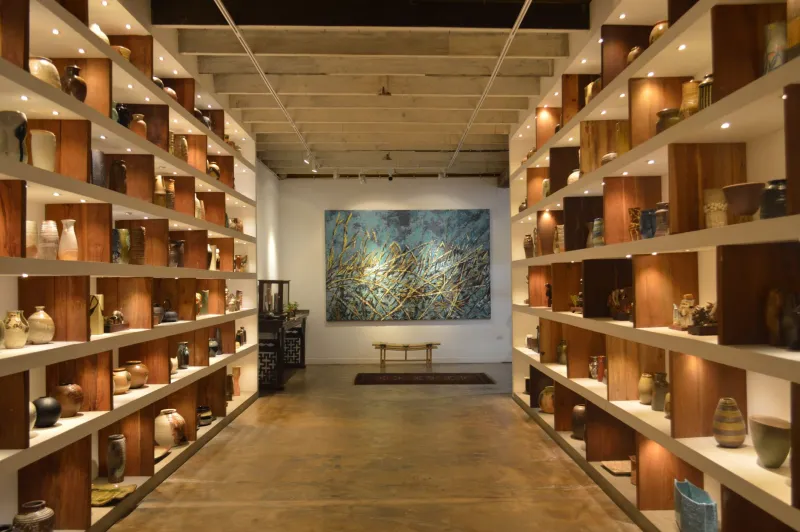
For most of the twentieth century, the American home functioned as a ledger of achievement. Square footage expanded. Collections grew. The dining room sideboard, the living room shelving unit, the curio cabinet in the hallway—each surface became a stage on which acquisitions performed their role as evidence of a life well-lived. More, by nearly every cultural measure, was better.
Something is changing.
In households from Greenwich, Connecticut, to Marin County, California, a different logic is quietly taking hold—one that prizes the deliberate refusal to acquire over the compulsive act of obtaining. The collector who once filled every wall is now leaving significant stretches of plaster bare. The designer who once recommended layering objects three rows deep on a shelf now counsels clients to display one, perhaps two, and to make those objects count.
This shift, observable across interior design studios, private collections, and the broader cultural conversation around consumption, did not emerge from nowhere. It has philosophical predecessors—and one of the most instructive can be found not in a Manhattan gallery or a Silicon Valley design firm, but in a nineteenth-century mansion in Pune, India, where Raja Dinkar Kelkar spent the better part of his life assembling one of the subcontinent's most remarkable private collections.
The Paradox at the Heart of Serious Collecting
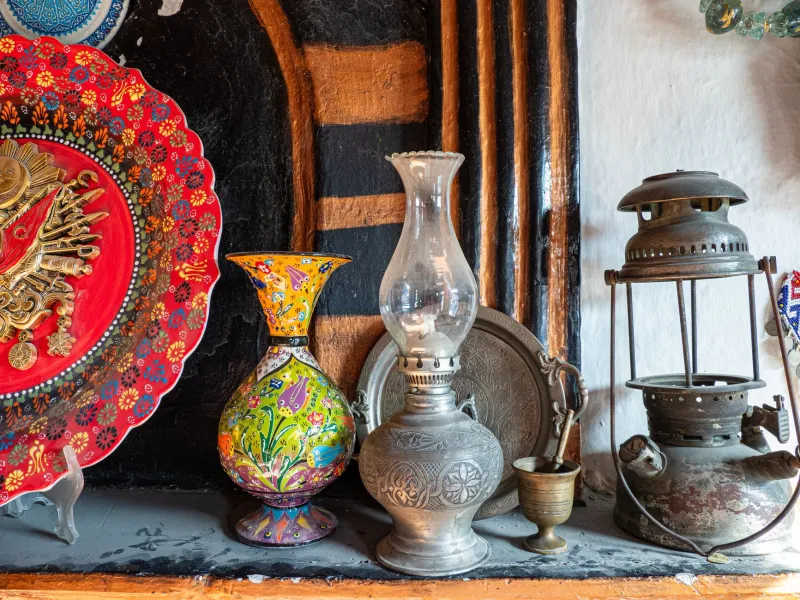
Kelkar ultimately gathered more than 36,000 objects over the course of his collecting life. The number sounds, at first, like a contradiction of the selectivity argument. But those who have studied his method—and those who walk through the Raja Kelkar Museum today—understand that the scale of the collection was never the point. The point was the quality of attention brought to each acquisition.
Kelkar did not collect casually. He did not purchase objects because they were available or affordable or fashionable. He sought pieces that carried meaning—objects that encoded the spiritual, domestic, and artistic life of Indian civilization in their form, material, and craftsmanship. Every item in the collection was chosen because it said something that nothing else in the collection already said.
This is precisely the standard that a growing segment of American collectors is now applying to their own homes.
"The question I ask clients now is not 'Do you love this?' but 'Does this earn its place?'" says one New York-based interior designer who works primarily with collectors in the $5 million to $20 million home market. "There's a meaningful difference between those two questions. Love can be impulsive. Earning a place requires justification."
When Less Became a Luxury
The psychological dimensions of this shift are worth examining carefully. Consumer psychologists have noted for some time that the relationship between wealth and conspicuous display has grown more complicated in recent decades. The research suggests that among the highest-earning households, visible accumulation has begun to carry a faint but unmistakable stigma—associated not with success but with insecurity.
Dr. Carolyn Mayer, a consumer psychologist based in Chicago who has studied the behavioral patterns of high-net-worth collectors, frames it this way: "What we're seeing is a recalibration of what signals sophistication. For a long time, the signal was abundance. Now, for a particular demographic, the signal is discernment. The implication is: I could have more. I chose not to."
This is, in a meaningful sense, the logic that animated Kelkar's approach to collecting—though his motivations were rooted less in social signaling than in a genuine reverence for the objects themselves. He understood that every item placed in proximity to another item either elevates or diminishes its neighbor. A collection of ten objects, each extraordinary, is a different and more powerful statement than a room of one hundred objects of varying quality.
The Design Industry Responds
The interior design community has been among the first professional sectors to formalize this shift. Across major American design markets—New York, Los Angeles, Chicago, Miami—there is a discernible movement away from maximalist layering toward what several prominent designers are calling "curatorial restraint."
The vocabulary is deliberate. Words borrowed from museum practice—curation, provenance, context, negative space—are appearing with increasing frequency in design consultations that would once have focused on sourcing and styling. The home is being reconceived not as a showroom but as a gallery: a space in which objects are displayed with enough breathing room to be genuinely seen.
"I visited the Raja Kelkar Museum during a trip to India three years ago, and it fundamentally altered how I think about display," says one San Francisco-based architect who specializes in residential interiors. "The museum does something remarkable in spaces that are not, by any contemporary standard, enormous. It makes you slow down. It makes you look. That is a design achievement that has nothing to do with budget and everything to do with intention."
The Collector Who Said No
The practical implications of this philosophy play out in ways that can be surprising to those accustomed to conventional collecting culture. Several collectors interviewed for this piece described the experience of actively deaccessioning—removing objects from their collections—as among the most clarifying decisions they had ever made.
One Boston-based collector of South Asian textiles, who has been building her collection for nearly two decades, described the moment she applied something like Kelkar's standard to her own holdings: "I had acquired things I genuinely admired. But when I asked whether each piece was truly irreplaceable—whether it said something the others didn't—I found I could let go of roughly a third of what I owned. What remained felt like a different collection entirely. More coherent. More alive."
This is the paradox that Kelkar's legacy illuminates with particular clarity: the collection becomes more, not less, through the act of reduction. Selectivity is not deprivation. It is, in the most rigorous sense, curation.
What the Museum Teaches the Market
The Raja Kelkar Museum exists, in part, as a demonstration of what this philosophy looks like at scale—and what it demands of both the collector and the visitor. Walking through the museum's galleries, one encounters objects that have been chosen not for their monetary value or their rarity alone, but for their capacity to communicate something essential about Indian artistic and domestic life.
That standard—what does this object communicate that no other object here communicates?—is one that American collectors are increasingly capable of hearing. The cultural moment, shaped by a decade of conversations about conscious consumption, sustainability, and the psychological costs of abundance, has created an audience for a message that Kelkar embedded in his collection long before it became fashionable.
Restraint, it turns out, is not un-American. It is simply a value that America is arriving at on its own terms, and finding, perhaps with some surprise, that it was already waiting—displayed with characteristic precision in a nineteenth-century mansion in Pune.