Rules of the House: Indian Game Boards and Toys as a Family Museum
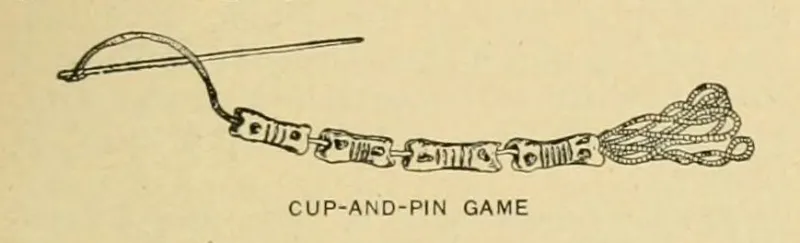
Photo: Mr. De Lancey Gill., Public domain, via Wikimedia Commons
Every family table has a constitution. It is written in house rules, in the way a grandmother deals cards, in the sibling who is always allowed to go first, and in the argument that begins when someone lands on the wrong square. In the United States, the board-game revival has made this visible again: shelves are filling with boxes, game cafes are opening, and families are rediscovering the peculiar intimacy of sitting around a table with rules. The Raja Kelkar Museum in Pune, India, offers a longer view. Its objects of play—game pieces, boards, toys, and amusements—show that a game is never only a way to pass an evening. It is a small museum of social values.
The Table as a Small Museum
An American game night is usually described in terms of entertainment. Someone brings a box; someone reads the rules; someone claims the best token. But watch what happens when a rule is disputed. The table becomes a parliament. A game board is a diagram of permitted movement. A die is a device for distributing luck. A token is a stand-in for a person. In the Raja Kelkar collection, these small systems are preserved not because they are quaint but because they are legible. They show how a culture teaches patience, risk, hierarchy, hospitality, and fairness.
What the Pieces Remember
Look closely at a game piece and you find a hand. A carved board may carry the wear of repeated play. A set of cowrie shells may have been kept in a cloth bag. A doll or a toy cart may show repair. These are not flaws; they are evidence. In American homes, we often discard the worn game piece and replace the box. The museum's approach suggests another response: treat the worn piece as a document. A missing token is a small archaeological crisis, but it is also a reminder that play was real enough to leave a mark.
Rules, Kinship, and the Art of Waiting
Indian play objects often sit at the intersection of instruction and kinship. A game can teach a child to wait, to watch, to lose without collapsing. It can also give grandparents a role that is not merely ceremonial. The oldest player may know a variation that is not printed in any rulebook. The youngest player may be allowed to bend a rule that everyone silently agrees to bend. In the United States, where families are scattered and screens compete for attention, the humble game table offers a counterpractice. It is not anti-technology; it is pro-presence.
Why Analog Play Feels Urgent Now
The American search for analog entertainment is often framed as nostalgia. The museum's objects complicate that story. They are not preserved because they are old. They are preserved because they encode a method: gather, agree on rules, play, remember. That method is portable. It does not require a particular religion, language, or income level. It requires a table and a willingness to be governed, for an hour, by a shared set of constraints.
A Family Experiment: Curate One Game Night
Try a museum-style exercise at home. Choose one game that has been in the family for years. Before playing, ask three questions: Where did it come from? Who taught it to whom? What rule has been changed, and why? Write the answers on a card and keep it with the box. If a piece is missing, do not immediately replace it; note the absence. The goal is not to make the game precious. It is to make the evening legible.
The Museum of Lost Play
A museum of lost play would not be a room of broken toys. It would be a room of rules that survived. The Raja Kelkar Museum's play objects remind American families that the table is not empty space. It is a stage for the values they want to rehearse. The next game night can be entertainment, certainly. It can also be a small act of cultural preservation—one rule, one story, one worn piece at a time.