Reading the Maker's Hand: A Collector's Field Guide to Authenticating Indian Handicrafts
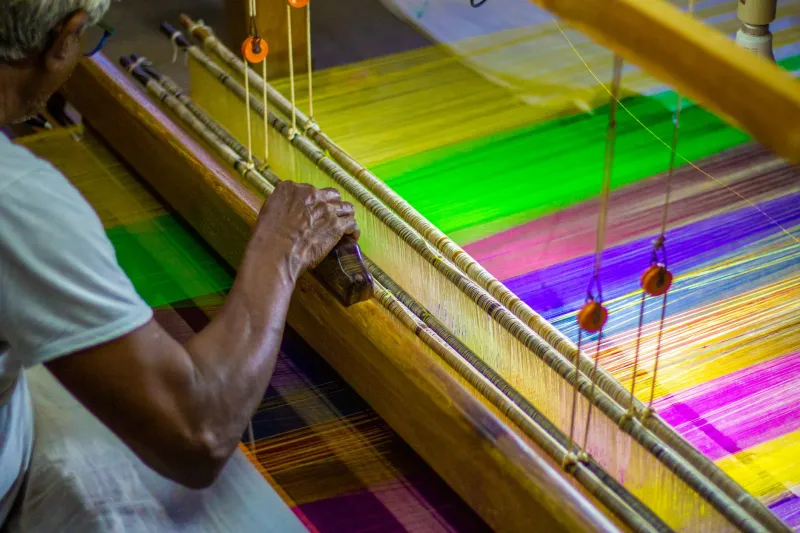
Every genuine Indian handicraft carries within it a record of its own making. The weaver's tension, the woodcarver's preferred angle of attack, the metalsmith's finishing stroke—these are not incidental details. They are signatures, as individual and traceable as handwriting, left behind by artisans whose identities are rarely documented in any formal archive. For the collector willing to develop the eye, these marks constitute a language. Learning to read it is both a practical skill and an act of cultural responsibility.
At the Raja Kelkar Museum in Pune, the objects in the permanent collection are understood as primary documents. They are studied not merely for their visual appeal but for what their physical construction reveals about the communities, traditions, and individual hands that produced them. This approach—treating material evidence as historical testimony—offers American collectors a rigorous framework for evaluating the Indian handicrafts they encounter in galleries, at import fairs, and through online dealers.
Why This Knowledge Is Urgent
India's artisan traditions are organized around community lineages. Specific craft forms—block printing, bidri metalwork, Patan patola weaving, dhokra casting—have been practiced by particular families and regional communities for generations, with technical knowledge transmitted through direct apprenticeship rather than written instruction. When a master craftsperson retires without a successor, the knowledge they carry does not simply diminish; it disappears entirely.
The pace of this disappearance has accelerated dramatically in recent decades. Economic pressures have driven younger generations away from craft trades. Machine production has undercut the market for labor-intensive handmade goods. And the global demand for objects that look handmade has created an incentive structure that rewards convincing imitation over authentic production.
For the American collector, this means that the ability to distinguish genuine artisan-made work from its machine-produced counterpart is no longer merely a matter of connoisseurship. It is a matter of consequence. Purchases that reward authentic makers support living traditions; purchases that reward imitators accelerate their extinction.
The First Evidence: Surface Irregularity
The most reliable initial indicator of hand production is the presence of controlled irregularity. This requires some clarification, because the word irregularity is often misunderstood.
Authentic handmade objects do not look accidental or poorly made. A master weaver's textile will exhibit extraordinary precision. What it will not exhibit is the absolute uniformity of machine production. Examine a genuine hand-woven textile under magnification and you will observe slight variations in thread tension across the width of the cloth—variations so small as to be invisible to the casual eye but entirely consistent under close inspection. Machine-woven textiles, by contrast, display a mechanical regularity that no human hand can replicate.
The same principle applies to carved wooden objects. Hand carving leaves behind tool marks that follow the natural movement of a human wrist—slight changes in depth and angle that give the surface a living quality. Machine routing produces grooves of perfectly consistent depth, with no variation whatsoever. Once you have trained your eye to perceive this distinction, it becomes difficult to unsee.
Regional Construction Conventions
Beyond surface texture, authentic Indian handicrafts carry regional signatures in their construction logic—the methods by which components are joined, finished, and structured. These conventions vary significantly by region and craft tradition, and they provide some of the most reliable evidence of geographic and community origin.
In Rajasthani woodwork, for instance, traditional joiners employed a specific system of wooden pegs rather than metal fasteners, a practice that reflects both the available materials and the aesthetic priorities of the region. Objects assembled using this technique—visible upon examination of joints and structural connections—can be attributed to this tradition with reasonable confidence. Objects that claim Rajasthani origin but employ metal hardware inconsistent with the tradition invite skepticism.
In Orissan pattachitra painting, authentic works are produced on a cloth canvas prepared through a labor-intensive process involving layers of chalk and tamarind paste. The resulting surface has a specific texture and weight that differs noticeably from the paper substrates used in commercial reproductions. Running a finger across the surface of a genuine pattachitra reveals a subtle resistance—a slight tooth—that paper cannot replicate.
Familiarizing yourself with these regional conventions before acquiring objects is among the most valuable investments a collector can make.
The Evidence of Materials
Authentic Indian handicrafts also carry material signatures that reflect both regional availability and community tradition. Natural dyes produce color profiles that differ fundamentally from synthetic alternatives—not merely in hue but in depth, variation, and the way they interact with light. A naturally dyed textile will exhibit what dyers call complexity: slight tonal variation across the surface that results from the organic nature of the dyeing process. Synthetic dyes produce flat, uniform color.
Similarly, traditional metalwork traditions employ alloy compositions that differ from modern commercial alternatives. Bidri ware—the striking black-and-silver inlay work associated with the Bidar region of Karnataka—is produced from a specific zinc-copper alloy that achieves its characteristic matte black finish through a chemical process using local soil. Authentic bidri has a surface quality and weight that distinguishes it clearly from the lacquered imitations now widely available.
When provenance is uncertain, consulting a spectrographic analysis service—now available through several American university art departments and independent conservation labs—can provide material composition data that either supports or contradicts a claimed origin.
Living Sources: The Craftsperson as Document
Perhaps the most direct path to authentic knowledge about Indian handicraft traditions is conversation with the artisans themselves. Several organizations operating in the United States—including the American India Foundation and various diaspora cultural societies—maintain relationships with artisan communities and facilitate direct contact between collectors and makers.
Living craftspeople can speak with authority about the construction methods, material choices, and regional conventions of their traditions in ways that no written guide can fully capture. They can also identify, with remarkable precision, the work of other practitioners within their community—recognizing subtle stylistic preferences and technical habits that amount to individual signatures.
Supporting institutions that document and preserve this oral and practical knowledge—including the Raja Kelkar Museum, which has long treated living craft knowledge as an integral component of its preservation mission—is among the most meaningful contributions an American collector can make to the field.
The Collector's Responsibility
The ability to authenticate Indian handicrafts is not merely a tool for protecting one's investment, though it serves that purpose effectively. It is a form of participation in the preservation of a living cultural heritage. Every collector who develops this knowledge, and who makes purchasing decisions accordingly, creates a market signal that rewards authentic production and supports the artisan communities whose survival depends on it.
The objects in the Raja Kelkar Museum's collection were gathered by a man who understood that each piece was also a record—of a tradition, a community, a set of skills that the world could not afford to lose. American collectors who bring this same understanding to their acquisitions become, in a meaningful sense, participants in the same project.