From Decoration to Declaration: How Museum Display Logic Is Entering the American Home
For most of the twentieth century, the American home operated under a relatively simple visual contract: furniture was chosen for comfort, walls were hung with prints for atmosphere, and shelves were filled to signal taste or signal nothing at all. Decoration was, by and large, a matter of aesthetic preference rather than intellectual intention. That contract is now being renegotiated—quietly, room by room, across living spaces from Brooklyn to Boise.
What is driving this shift is not a single trend but a convergence: the democratization of curatorial knowledge through social media, the growing influence of global cultural institutions, and a broader cultural appetite for objects that carry genuine meaning. At the center of this conversation, perhaps unexpectedly, sits a museum in Pune, India—one whose radical philosophy of display has been quietly informing a new generation of American collectors and design-conscious homeowners.
The Difference Between Decorating and Displaying
The distinction may seem subtle, but it is foundational. Decorating asks: does this look good here? Displaying asks: what does this object communicate, and how does its placement shape that communication?
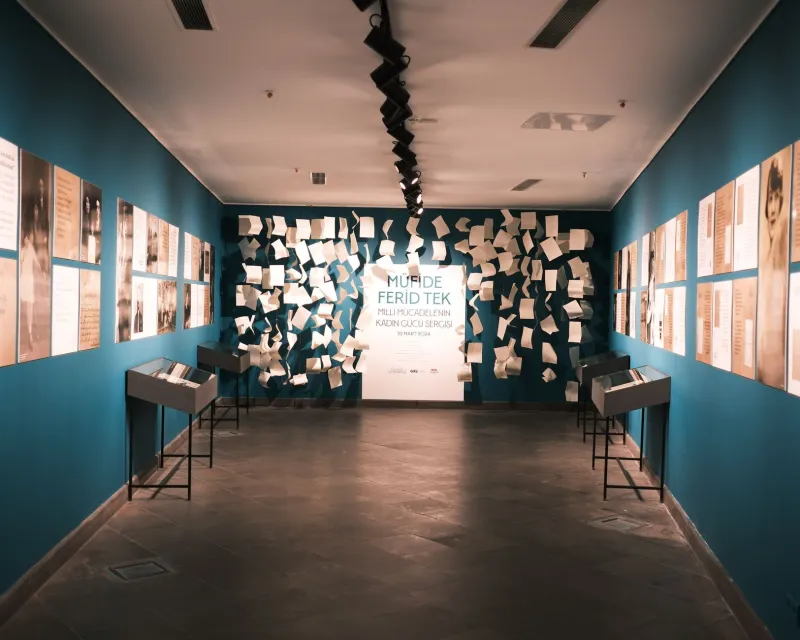
Museums have long understood that the way an object is shown is inseparable from what it means. Lighting angle, spatial breathing room, the relationship between neighboring artifacts, the height at which something is mounted—all of these choices constitute an argument about value and significance. When a museum places a centuries-old oil lamp in a vitrine with carefully calibrated directional lighting, it is not merely protecting the object. It is insisting that the viewer slow down, look carefully, and reckon with what they are seeing.
This is precisely the logic that Raja Dinkar Kelkar applied to his extraordinary collection in Pune. Over the course of decades, Kelkar assembled more than 36,000 objects—ranging from intricately carved door frames and ivory chess sets to humble betel nut cutters and household lamps used in daily ritual. His insistence on displaying domestic artifacts alongside recognized works of art was, at the time, genuinely radical. It argued that the boundary between the fine and the functional was an artificial one, and that the objects woven into the texture of ordinary life deserved the same attentive gaze as anything hanging in a gallery.
How That Philosophy Traveled
The Raja Kelkar Museum's approach did not spread through formal art world channels. It spread the way most ideas spread today: through images, through conversation, and through the quiet influence of people who encountered it and carried something home.
American design writers and collectors who have visited the museum in Pune frequently describe a particular disorientation—a productive one. The experience of seeing a centuries-old mustard oil press displayed with the same curatorial seriousness as a Mughal miniature forces a recalibration of assumptions. If an oil press can be art, or at least can be displayed as though it matters as much as art, then what does that imply about the objects in one's own home?
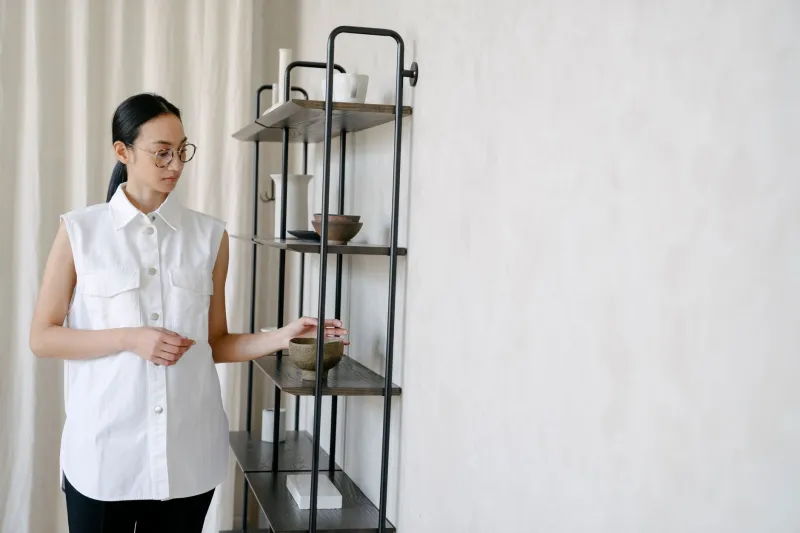
This question has migrated into American design culture through platforms like Pinterest and Instagram, where images of thoughtfully arranged objects—a single ceramic vessel on an empty shelf, a collection of wooden tools mounted like sculpture, a set of textiles displayed with gallery-style spacing—have accumulated millions of engagements. The aesthetic is spare, intentional, and unmistakably influenced by institutional display logic.
The Techniques Making Their Way Into Living Rooms
Several specific curatorial practices, once confined to professional museum settings, are now being adopted by American homeowners with increasing sophistication.
Negative space as an active element. In museum display, the space around an object is understood to be as important as the object itself. Empty space is not absence—it is a frame, a pause, a signal to the eye that what it is about to encounter deserves full attention. American homeowners are increasingly resisting the impulse to fill every available surface, allowing individual objects to breathe and assert their presence.
Directional lighting. Track lighting and adjustable picture lights, once associated almost exclusively with gallery settings, are now common in residential interiors. The ability to angle light across an object—to reveal texture, cast shadow, and draw the eye—transforms the experience of looking at something in a fundamental way. A carved wooden figure lit from below reads entirely differently than the same figure lit from above.
Thematic grouping. Rather than arranging objects by size or color alone, curators group by narrative: by period, by material, by cultural origin, by the story they collectively tell. This approach is increasingly visible in American homes, where collections of objects are assembled not because they match but because they speak to one another across time or geography.
The single-object display. Perhaps the most dramatic departure from conventional decorating logic is the deliberate choice to display one object in isolation—on a pedestal, on a bare shelf, or in a dedicated niche. This practice, borrowed directly from museum vitrine culture, insists that the object is sufficient. It does not need company or context. It is enough.
What This Means for the Objects We Choose
The adoption of museum display logic does more than change how objects are shown. It changes which objects are chosen in the first place. When a homeowner begins to think like a curator, the criteria for acquisition shift. The question is no longer simply whether something is beautiful or affordable or on trend. The question becomes: does this object have something to say?
This is a question that Raja Kelkar asked relentlessly throughout his collecting life. His museum stands as evidence that the answer can be found in the most unexpected places—in a brass lamp used to welcome a monsoon, in a pair of scissors shaped like a crane, in the worn handle of a kitchen implement that passed through generations of hands. The significance was always there. What was required was the willingness to look.
American collectors are increasingly willing to look. They are acquiring objects from Indian craft traditions, from Indigenous American artisans, from estate sales and flea markets, with a new kind of seriousness—treating each acquisition as a decision that will shape the visual and intellectual character of a space they inhabit every day.
The Home as Personal Museum
The idea of the home as a personal museum is not new. It has antecedents in the Renaissance cabinet of curiosities, in the Victorian parlor, in the mid-century American living room arranged around a single statement piece. But the current iteration feels different in its self-consciousness. Today's curator-homeowner is not simply accumulating objects that reflect status or curiosity. They are making deliberate arguments about what deserves to be preserved, seen, and understood.
In this sense, they are doing something very close to what Raja Kelkar did in Pune—insisting, through the act of careful display, that the ordinary is worthy of serious attention. The museum he built stands as one of the most compelling demonstrations of that argument anywhere in the world. The fact that its influence is now being felt in American living rooms, filtered through social media and design culture, suggests that the argument was always more universal than its origins might imply.
The objects we choose to live with, and the care with which we choose to show them, are a form of statement. Museums have always understood this. American homeowners are arriving at the same understanding, one carefully lit shelf at a time.