What a Pune Museum Is Teaching Americans About the Homes They Already Live In
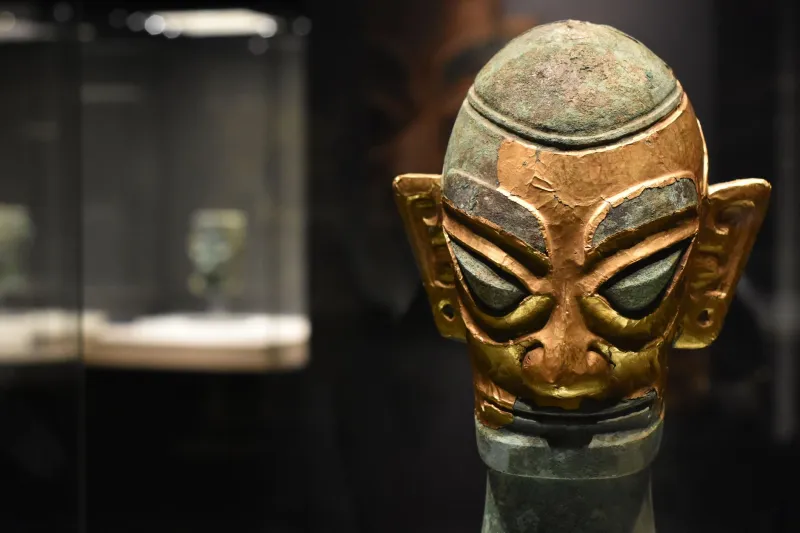
There is a particular kind of traveler arriving at Raja Kelkar Museum these days. They are not the typical heritage tourist, nor the academic researcher with a grant and a bibliography. They are interior designers from Portland, antique collectors from Charleston, and homeowners from Chicago who have grown quietly dissatisfied with the visual grammar of their own living rooms. They have come to Pune, India — some for the first time — because something in the idea of this museum, and the man behind it, promised them a language they had not yet learned.
What they discover inside the museum's layered, densely inhabited galleries tends to stay with them long after the flight home.
A Collection That Refuses to Separate Art from Life
Raja Dinkar Kelkar spent the better part of his life assembling more than 36,000 objects — not to fill a vault or impress an institution, but to tell the story of how ordinary Indians lived, worshipped, cooked, adorned themselves, and made meaning from the materials available to them. The result is a collection that defies the conventional Western museum logic of isolation and pedestal. Objects here speak to one another. A lamp stands near the vessel it once illuminated. A betel nut cutter rests in proximity to the boxes that stored the leaves. Domesticity, in this museum, is not a footnote to culture — it is the argument.
For many American visitors, this framing arrives as something close to a revelation. The United States has long maintained a fairly strict hierarchy of objects: fine art belongs in museums, craft belongs in boutiques, and the contents of a kitchen or a bedroom belong nowhere in particular. Raja Kelkar Museum dismantles that hierarchy with quiet authority. Every object on display was, at some point, held in someone's hand for a practical purpose. That history of use does not diminish its beauty. In many cases, it amplifies it.
The American Home, Reconsidered
Design culture in the United States has spent the last decade oscillating between competing philosophies. Minimalism promised clarity and calm — the Marie Kondo moment, the all-white kitchen, the ruthless editing of possessions down to only what sparks joy. Maximalism offered a counter-argument: that richness, layering, and abundance are themselves a form of meaning-making. Neither camp, however, has offered a particularly coherent answer to the deeper question of why we keep what we keep.
That is precisely the question Raja Kelkar Museum seems to answer — or at least, to ask more productively. Visitors who walk through its galleries begin to notice something: every object in this collection was chosen not for its market value or its aesthetic neutrality, but for the story it carries. A betel nut cutter shaped like a woman. A lamp whose form echoes a deity. A door latch whose craftsmanship suggests its maker understood that even a threshold deserved attention.
American visitors report returning home and looking at their own possessions with new eyes. Not with guilt, and not with the acquisitive hunger of someone who has discovered a new category of thing to want — but with a kind of archaeological curiosity. What does this object say about who I am, where I come from, and what I value? Is it here because it was convenient, or because it means something?
The Pilgrimage Phenomenon
Museum professionals and travel writers have begun to notice a pattern. Pune, long overshadowed by Mumbai in the international imagination, is attracting a specific demographic of culturally motivated American travelers who cite Raja Kelkar Museum as a primary destination. They tend to arrive having done considerable research. They linger. They return to certain galleries. They ask docents detailed questions about provenance and function. And they leave carrying something that cannot be purchased in the gift shop.
The phenomenon reflects a broader hunger in American design and collecting culture for frameworks that feel less arbitrary than trend cycles and more substantive than mere aesthetics. The Indian domestic arts tradition, as represented at Raja Kelkar Museum, offers exactly that: a coherent philosophy in which beauty and utility are not in competition, in which the sacred and the everyday are not separated by velvet ropes, and in which the act of collecting is understood as an act of cultural memory rather than personal accumulation.
Intentional Eclecticism as a Design Philosophy
One of the more unexpected takeaways that American visitors bring home from Pune is a renewed permission to embrace complexity. The Western minimalist tradition has sometimes implied that having many things — different things, things that don't obviously match — is a kind of aesthetic failure. Raja Kelkar's collection argues the opposite. Its power comes precisely from its multiplicity, from the way objects of different regions, periods, materials, and functions coexist in productive conversation.
For American homeowners who have felt quietly embarrassed by the inherited grandmother's lamp that doesn't match the mid-century sofa, or the folk art piece that refuses to coordinate with the gallery wall, this is liberating news. Eclecticism, when practiced with intention and curiosity, is not disorder. It is a form of honesty — an acknowledgment that a life well-lived accumulates meaning from many directions at once.
The key word, of course, is intentional. What distinguishes Raja Kelkar's collection from mere accumulation is the presence of a guiding sensibility, a set of values that determined what was worth preserving and why. Visitors who absorb that lesson return home not to buy more things, but to look more carefully at the things they already have.
What the Museum Gives That No Catalog Can
It is worth asking why these Americans are traveling to Pune rather than simply reading about Indian decorative arts or browsing auction catalogs from the comfort of their homes. The answer has something to do with the irreducible experience of physical proximity to objects that were made to be touched, used, and lived alongside.
Raja Kelkar Museum is not a digital experience, and its power does not translate fully into photographs. The scale of the collection, the density of the display, the evidence of a single human life devoted to the preservation of other human lives — these things require presence. They require the visitor to slow down, to look, and to allow the objects to ask their questions in return.
For Americans accustomed to the frictionless consumption of curated imagery on social media, this is itself a kind of education. The museum teaches, among other things, that some knowledge is only available to those who show up.
That, perhaps, is the deepest lesson Pune has to offer: that understanding your own home sometimes requires leaving it.