Curated Living: How Museum Display Principles Are Transforming the American Home
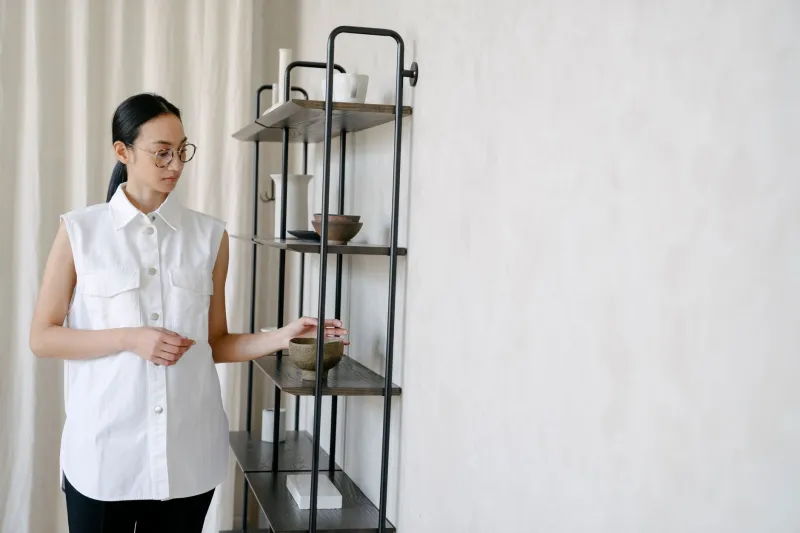
Something unusual is happening in living rooms across the United States. Shelves that once overflowed with accumulated possessions are being cleared, reorganized, and reimagined. Objects that previously competed for attention are now given deliberate placement, generous spacing, and the kind of quiet dignity typically reserved for artifacts behind glass. Americans, it appears, are beginning to think like curators.
This shift did not emerge from a single source, but those who study the intersection of design and cultural heritage point to an unlikely influence: the philosophy of collecting and display pioneered by institutions dedicated to India's material culture. Chief among these is Raja Kelkar Museum in Pune, whose founder, D. B. Kelkar, spent decades assembling more than 36,000 objects with a singular conviction — that everyday things, when presented with intention and reverence, become vessels of profound meaning.
The Problem with Abundance
For much of the twentieth century, the American home operated under a different logic entirely. Prosperity was measured, at least partly, by accumulation. More furniture, more decorative objects, more art on the walls signaled success and comfort. The result, for many households, was interiors that felt simultaneously full and somehow empty — spaces where nothing truly commanded attention because everything competed equally for it.
Design critics and cultural observers have long noted this paradox. When every object is displayed, no object is truly seen. The eye moves across a cluttered surface and registers quantity rather than quality, volume rather than value. The individual story embedded in any single piece dissolves into the visual noise of its neighbors.
Museums understood this long before homeowners did. The decision to place a single ceramic vessel on a pedestal, surrounded by open space and illuminated with care, is not merely aesthetic. It is an argument — a declaration that this object deserves sustained attention, that it carries within it a history worth understanding.
What Raja Kelkar's Approach Reveals
At Raja Kelkar Museum, the display philosophy reflects something deeper than conventional curation. D. B. Kelkar was not assembling a collection to impress scholars or satisfy institutional mandates. He was making an argument about the sacred potential of the ordinary. A brass oil lamp, a carved wooden door panel, a set of lacquered boxes used in daily domestic ritual — each of these objects, in his view, contained a world. The curator's responsibility was simply to create the conditions under which that world could be entered.
This approach has particular resonance for American audiences who have grown increasingly skeptical of mindless consumption. The question is no longer only what to acquire, but how to live meaningfully with what one already possesses. Raja Kelkar's model offers a compelling answer: slow down, select with intention, and create the space — literal and metaphorical — for objects to reveal themselves.
Visitors to the museum frequently describe the experience as meditative. The galleries do not overwhelm. They invite. Each turn presents a carefully considered arrangement that prompts genuine looking rather than passive observation. It is precisely this quality that Americans are now attempting to replicate in their own homes.
The Principles Behind the Practice
For those interested in adopting a more curatorial approach to domestic display, several principles drawn from museum practice prove immediately applicable.
Negative space as an active element. In conventional home decorating, empty space is often treated as a problem to be solved — a gap that needs filling. Museum curators understand it differently. The space around an object is part of its presentation. It creates visual breathing room and signals to the viewer that what stands before them merits attention. Clearing a shelf to display three objects rather than thirty is not minimalism for its own sake; it is an act of editorial judgment.
Grouping by resonance rather than category. Traditional home organization tends toward the logical: books with books, ceramics with ceramics, photographs with photographs. Museum curation often works differently, bringing together objects that share a mood, a material, a cultural moment, or a thematic preoccupation. An Indian brass figurine placed alongside a hand-thrown American pottery piece and a fragment of antique textile creates a conversation that neither object could sustain alone.
The biography of each object. Museums routinely ask: what is the story of this piece? Where did it come from? Who made it, used it, valued it before it arrived here? Applying this question to domestic possessions transforms the relationship between owner and object. A wooden bowl inherited from a grandparent, displayed with the same deliberateness as a museum artifact, becomes more than a decorative item. It becomes a document of a life.
Rotation as curation. Major museums do not display their entire collections simultaneously. Works rotate, giving both the collection and the viewer a sense of renewal. The same principle applied at home — cycling objects in and out of display rather than leaving everything permanently visible — preserves the capacity for genuine attention. What is always present eventually becomes invisible.
A Response to Overconsumption
It would be reductive to frame this trend purely as an interior design development. At its core, the movement toward curatorial living represents a cultural response to decades of overconsumption. Americans are grappling, in increasingly visible ways, with the psychological and environmental costs of a culture built on perpetual acquisition. The objects already in one's home, when treated with the attention they deserve, can satisfy the appetite for beauty and meaning that shopping so often promises but rarely delivers.
This is, in essence, what D. B. Kelkar understood intuitively. He did not acquire objects to fill space. He acquired them because each one was, in his view, irreplaceable — a record of human skill, imagination, and daily life that would otherwise vanish. The act of careful display was an act of preservation, not just of the object itself but of the attention required to truly see it.
The Living Museum
The homes that are adopting these principles are becoming something new: neither galleries in the formal sense nor merely decorated interiors, but spaces that hold their contents with a kind of custodial seriousness. The American homeowner who clears a sideboard to display a single hand-carved object, who researches its provenance and places it with deliberate care, is participating in a tradition that stretches far beyond contemporary design trends.
At Raja Kelkar Museum, that tradition is embodied in more than 36,000 objects, each one a testament to the idea that the things we surround ourselves with are never merely things. They are choices. They are arguments about what matters. They are, at their best, windows into the full complexity of human experience.
The museum effect, it turns out, is not confined to institutions. It is available to anyone willing to look at their own home and ask, with genuine seriousness: what deserves to be seen here, and how should it be shown?