From Storage to Story: The Cultural Shift Turning American Homes Into Personal Galleries

For much of the twentieth century, the American home operated on a simple premise: more was more. Department store credit lines expanded alongside living room square footage, and the accumulation of objects became a reliable shorthand for prosperity. Possessions were acquired, stored, and eventually forgotten—furniture arranged for function, shelves filled to capacity, drawers that closed with difficulty. The home was, in many respects, a warehouse for the life being lived rather than a reflection of it.
Something has changed.
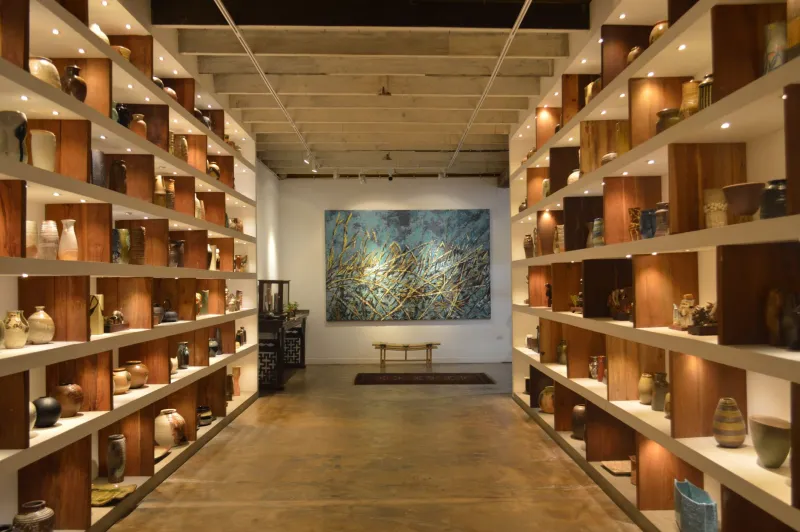
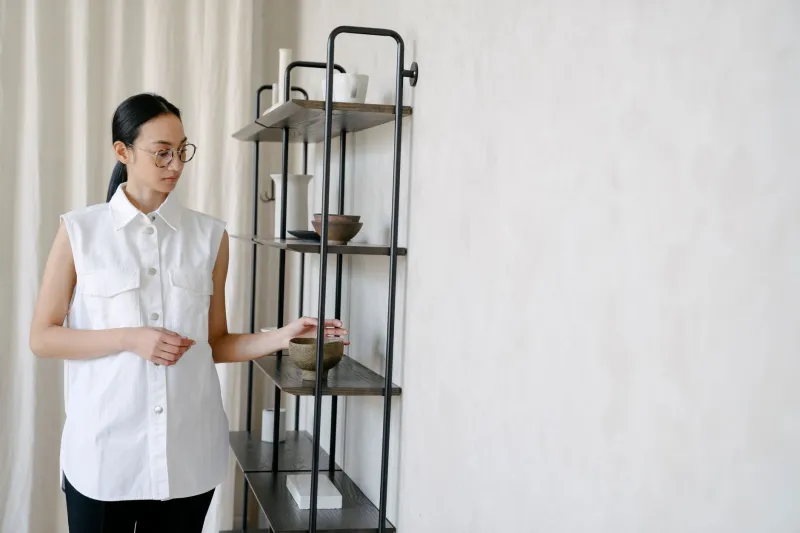
Across the country, a measurable shift is occurring in how Americans relate to the things they choose to keep. The evidence is visible in interior design publications, in the sudden popularity of object-focused social media accounts, and in the language people now use when describing their homes. Words like intentional, curated, and considered have migrated from museum catalogs into conversations about living rooms. The home, increasingly, is being treated as a gallery—and the objects within it as art.
The Fatigue That Opened a Door
The minimalist wave that swept through American design culture in the early 2010s promised liberation. Stripped interiors, bare surfaces, and a near-religious commitment to emptiness were presented as the antidote to overconsumption. For a time, this resonated. Closets were emptied, surfaces cleared, and the aesthetic of institutional blankness was embraced as a kind of spiritual discipline.
But minimalism, for many Americans, eventually produced its own discomfort. Homes that had been purged of personality felt cold, transactional, and ultimately disconnected from the lives being lived within them. The objects that had been discarded in the name of simplicity were, it turned out, carriers of memory, identity, and meaning. Their absence left a vacuum.
What emerged in the aftermath was not a return to accumulation but a search for something more nuanced—a third way between the cluttered maximalism of the past and the sterile emptiness of the minimalist ideal. Americans began asking a different question: not how much should I keep, but why does this deserve a place in my home?
This is precisely the question that has animated the Raja Kelkar Museum in Pune, India, for decades.
A Collector Who Understood the Difference
D.G. Kelkar, the visionary behind what became one of India's most extraordinary private collections, never confused accumulation with curation. Over the course of his lifetime, he assembled more than 36,000 objects drawn from across India's material culture—lamps, textiles, door frames, writing instruments, toys, and utensils—not as a demonstration of wealth but as an act of cultural preservation. Each object was selected because it carried meaning. Each was displayed in relationship to others, creating a visual language that no single piece could speak alone.
The museum that houses his collection does not overwhelm the visitor with volume. It instructs. The arrangement of objects teaches the eye to slow down, to look carefully, and to ask questions. This is the museum effect: the transformation of looking from passive reception into active inquiry.
American homeowners are beginning to apply this same logic to their personal spaces.
Social Media and the Education of the Eye
No account of this shift would be complete without acknowledging the role of social media in educating American taste. Platforms like Instagram and Pinterest have exposed millions of users to interior environments from around the world—Japanese wabi-sabi aesthetics, Scandinavian craft traditions, and, increasingly, the rich material culture of South Asia. Objects that might once have seemed exotic or unfamiliar now arrive in the American visual imagination with context and narrative attached.
Museum accounts, in particular, have played an outsized role. When a major institution shares a close-up photograph of a carved wooden panel alongside an explanation of its origin and significance, it models a way of looking that viewers carry back into their own homes. The object becomes more than decorative; it becomes a text worth reading.
This visual education has raised expectations. Consumers who once purchased objects for their surface appeal are increasingly asking about provenance, craft, and meaning. The question who made this, and how is becoming as relevant to home furnishing decisions as questions of color or scale.
The Museum as Blueprint
What museum display practice offers the American home is not a set of aesthetic rules but a methodology. The principles are transferable even when the objects are entirely different.
Consider the concept of intentional grouping—the museum practice of placing objects in proximity to one another so that each illuminates the others. A well-composed shelf in a private home operates on the same principle. An object placed in isolation speaks only for itself; placed in relationship, it participates in a conversation.
Consider also the practice of deliberate negative space—the strategic use of emptiness not as absence but as emphasis. Museum curators understand that what surrounds an object shapes how it is perceived. A ceramic vessel displayed against an uncluttered background commands attention in a way that the same vessel, crowded among competitors, cannot.
Finally, consider narrative sequencing—the arrangement of objects to suggest movement through time, geography, or theme. This is not beyond the reach of the private collector. A homeowner who arranges objects according to a coherent logic—even one entirely personal—creates an environment that rewards sustained attention rather than demanding it.
A Living Practice
The shift underway in American homes is not, at its core, an aesthetic movement. It is a philosophical one. The question being asked is not merely what should my home look like but what should my home mean—and what does the selection of objects within it say about the values, experiences, and commitments of the person who lives there.
Raja Kelkar understood this question with unusual clarity. His collection was not assembled to impress; it was assembled to preserve, to teach, and to honor the intelligence embedded in ordinary Indian objects by the hands that made them. That sensibility—the conviction that everyday things deserve the attention usually reserved for fine art—is precisely what contemporary American collectors are reaching toward.
The museum effect, it turns out, is not confined to museums. It is a way of seeing that, once acquired, reshapes every environment it enters.