Reading What the Maker Left Behind: A Method for Decoding Indian Craft Through Its Objects
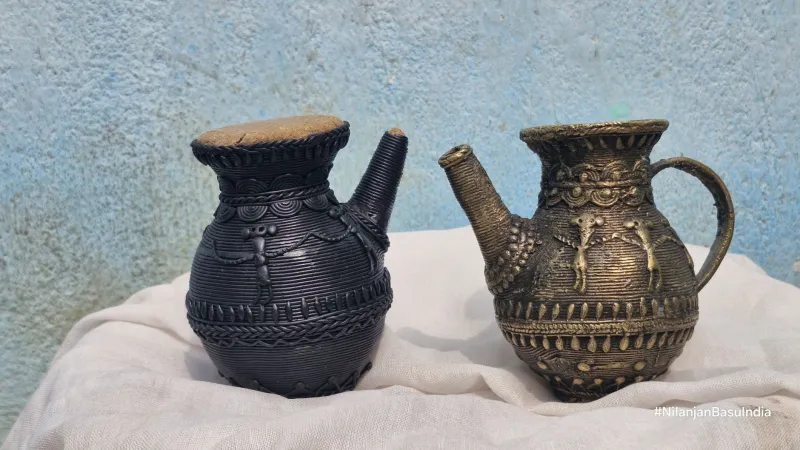
There is a particular kind of knowledge that lives inside a finished object. It is not the knowledge written in catalogs or recited by auction house specialists. It is the knowledge embedded in a tool mark left at the edge of a carved panel, in the precise angle at which a brass hinge was set, in the slight asymmetry of a painted border that reveals a human hand rather than a mechanical one. This is the knowledge that D.G. Kelkar spent a lifetime learning to read—and it is the same knowledge that American collectors and museum professionals can begin to cultivate by adopting a systematic, object-centered methodology drawn from his extraordinary legacy.
At the Raja Kelkar Museum in Pune, India, more than 36,000 objects stand as testimony to what one devoted observer could understand about a culture by examining what it made. The collection spans centuries of Indian domestic, ceremonial, and decorative production. What makes it remarkable is not merely its scale, but the interpretive philosophy behind it: that an artifact, studied with sufficient care and patience, will disclose the conditions of its own creation.
The Premise of Reverse Literacy
In most Western educational frameworks, craft knowledge travels from maker to learner through direct transmission—apprenticeship, demonstration, guided practice. When that chain is interrupted, as it frequently is across the vast geography of India's regional traditions, the object itself becomes the only surviving record of the maker's intelligence.
Reverse literacy, as a methodology, begins with the assumption that a skilled observer can reconstruct significant portions of that intelligence by working backward from the finished form. This is not guesswork. It is disciplined inquiry, and it requires learning to ask the right questions of the right surfaces.
What tool produced this line? What sequence of steps would have been necessary to arrive at this result? Does the construction logic suggest a single craftsperson working alone, or a workshop tradition with divided labor? These questions, posed consistently and systematically, begin to build a vocabulary for understanding not just individual objects, but entire traditions.
Starting With Material: The First Conversation
For American collectors approaching Indian craft for the first time, material is the most accessible entry point. Before examining form or decoration, identify what the object is made from—and then ask why that material was chosen in that region at that time.
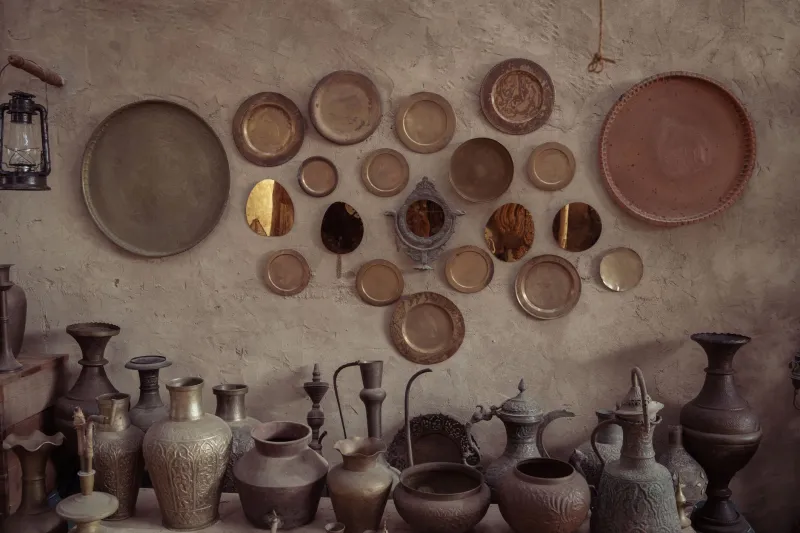
Indian craft traditions are profoundly local in their material logic. The brass work of Moradabad does not look like the brass work of Thanjavur, not simply because of aesthetic preference, but because the alloy compositions, the available tools, and the regional trade networks that supplied raw materials all differed. A collector who learns to distinguish these material signatures gains an immediate advantage in dating, attributing, and evaluating objects.
At the Raja Kelkar Museum, objects are frequently displayed in proximity to others from the same regional tradition, allowing this kind of comparative material analysis to occur naturally. This curatorial decision reflects Kelkar's understanding that objects speak more clearly in conversation with their neighbors than in isolation.
Surface Evidence: Where the Maker's Hand Remains
Once material has been identified, attention should turn to surface evidence—the traces of process that survived the completion of the object. In handmade Indian artifacts, these traces are rarely hidden. They are, in fact, often considered part of the object's integrity.
Look for tool marks at junctions and edges. In woodcarving traditions, the direction and depth of chisel strokes can identify specific regional schools. In metalwork, the presence or absence of file marks after casting indicates whether the piece was considered finished at the foundry or refined by a secondary craftsperson. In textile-related objects, examine the regularity of pattern repetition: a slight drift in spacing across a repeated motif is the signature of hand-block printing, while mechanical regularity points to later industrial production.
This kind of surface reading requires practice, but it rewards patience. American museum professionals who have spent time with the Raja Kelkar collection frequently report that their capacity to read these traces improves rapidly once they understand what they are looking for. The museum's holdings, which include objects from across India's major craft regions, provide an unusually comprehensive training ground.
Regional Variation as Diagnostic Tool
One of the most powerful instruments in the reverse-literacy toolkit is a working knowledge of regional variation. Indian craft traditions, even within a single medium, diverge sharply across geography. Understanding these divergences transforms an object from an anonymous artifact into a located one—a thing that came from somewhere specific and carries the cultural logic of that place.
Consider the treatment of the human figure across Indian decorative arts. In the folk traditions of Rajasthan, figures are frequently rendered with bold, flat color and minimal modeling, reflecting an aesthetic that values graphic clarity over illusionistic depth. In the decorative arts of Bengal, by contrast, figures often exhibit a more fluid line and a greater concern with narrative expression. Neither tradition is more sophisticated than the other; they are simply different answers to different cultural questions.
A collector who can recognize these distinctions is not merely showing off specialized knowledge. They are demonstrating the capacity to read cultural context—to understand that an object's visual decisions are never arbitrary, but are always in dialogue with a specific community's values, history, and sense of beauty.
Wear, Repair, and the Biography of Use
Among the most undervalued sources of information in any handmade object is the evidence of its life after completion. How was it used? By whom? Was it repaired, and if so, by what method?
In Indian domestic objects particularly, patterns of wear reveal patterns of use that can be deeply informative. A brass lamp worn smooth at one handle but not the other was carried consistently in one hand by a right- or left-handed user. A wooden storage box with worn corners on one side was habitually positioned against a wall. A textile object with concentrated fading along one edge was stored folded in a particular way.
Repairs are equally eloquent. Traditional Indian repair methods often reflect the same regional craft logic as the original construction, and comparing a repair to its surrounding surface can sometimes yield more information about local technique than the undisturbed object alone. Kelkar's collection includes numerous objects that were preserved precisely because of, rather than despite, their evidence of long use—a curatorial decision that reflects his belief that the biography of an object is inseparable from its meaning.
Building a Personal Framework
For American collectors and museum professionals seeking to apply these principles, the practical first step is to establish a personal observation protocol. Before consulting any reference material, spend a minimum of fifteen minutes with a new object, recording observations about material, surface, construction logic, wear patterns, and regional signals. Only after this initial observation period should external sources be consulted.
This sequence matters. It trains the eye to generate questions rather than simply receive answers, which is the cognitive posture that genuine object literacy requires. The Raja Kelkar Museum's own interpretive materials are designed to support this kind of active, questioning engagement—offering context that enriches rather than replaces the direct encounter with the object.
The maker is not present. But the making is. And for those willing to look carefully enough, it speaks with surprising clarity across the distance of centuries and continents.