Beyond the Expected: A Collector's Guide to India's Overlooked Artistic Treasures
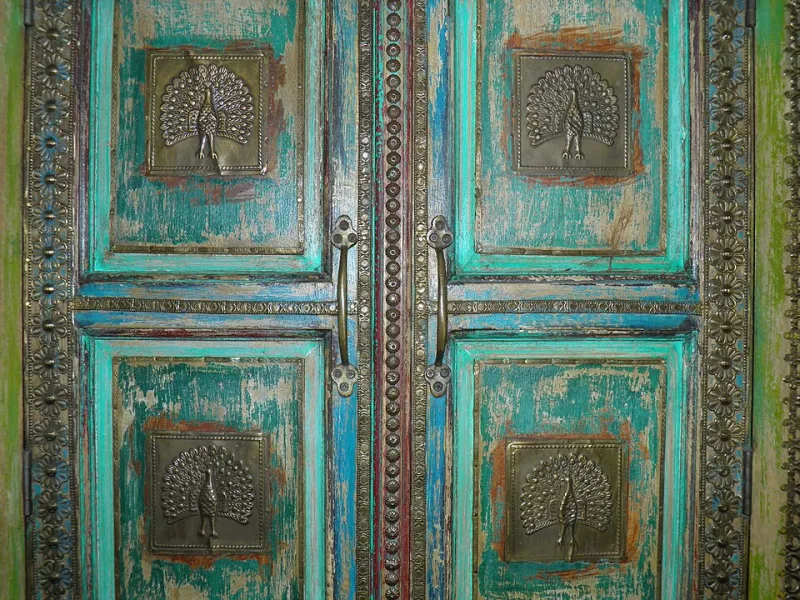
Photo: Yulem, CC BY-SA 4.0, via Wikimedia Commons
For decades, Indian art collecting in the United States followed a fairly predictable script. Serious collectors pursued Mughal miniature paintings, classical bronze sculptures, or finely woven Kashmiri shawls. Interior designers reached for block-printed textiles and hand-knotted rugs. Both groups were responding to genuine beauty, and those categories remain significant. But something has shifted in recent years. A new generation of American collectors—drawn by global design trends, greater access to scholarly resources, and a growing appetite for objects with authentic cultural depth—is venturing into territory that established dealers once considered niche.
The result is a quiet but meaningful expansion of what counts as collectible Indian art. From estate sales in New England to specialty dealers in Brooklyn and Los Angeles, objects that once languished in storage rooms are finding appreciative new homes. This guide is designed to help curious collectors navigate that expanding landscape with both enthusiasm and care.
Vintage Brassware: Functional Objects with Extraordinary Presence
Among the categories gaining the most traction with American collectors, vintage Indian brassware stands out for its combination of visual impact, relative affordability, and remarkable historical depth. Unlike decorative objects made purely for display, traditional Indian brass pieces—oil lamps (diyas), water vessels (lotas), betel nut boxes (paan daani), and ritual containers of all descriptions—were made to be used. That functional origin gives them a grounded quality that purely ornamental objects sometimes lack.
What to look for: Pieces from the eighteenth and nineteenth centuries often show engraved surface decoration featuring floral scrollwork, mythological scenes, or geometric patterns. Regional variation is significant. Brasswork from Rajasthan tends toward bold, heavily embossed forms, while pieces from Bengal and Odisha are often more refined and intricately detailed. Condition matters, but honest patina is desirable—it is evidence of authentic age and use. Be cautious of pieces with uniform, artificially darkened surfaces, which can indicate recent attempts to simulate age.
Where to find them: Established South Asian art dealers in major American cities are the most reliable starting point. Estate sales with provenance from families who lived or worked in India during the colonial period occasionally yield significant pieces. Online platforms have expanded access considerably, though they also require more due diligence on the buyer's part.
Traditional Gaming Sets: Where Play Meets Craft
One of the most unexpected categories to attract collector attention in recent years is traditional Indian gaming equipment. Chess sets (shatranj) with hand-carved ivory or bone pieces, pachisi boards inlaid with mother-of-pearl, and chaupar game cloths embroidered in silk represent a category where the history of leisure, craft, and social ritual intersect in fascinating ways.
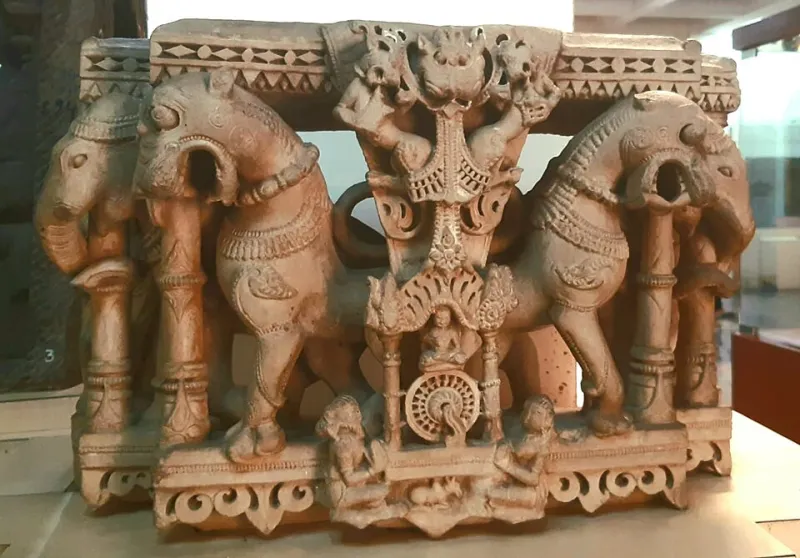
Indian chess sets in particular have a distinguished collecting history in Europe but remain underappreciated in the American market. Sets produced for Mughal and Rajput courts were often extraordinary objects in their own right—figures rendered as elephants, horses, foot soldiers, and viziers in materials ranging from carved soapstone to cast silver. Even more modest sets produced for middle-class households carry considerable charm and historical interest.
For collectors drawn to this category, the key consideration is integrity: are all pieces present, and are they consistent in material and style? Mixed sets—assembled from multiple incomplete examples—have their own interest but should be priced and represented accordingly. Documentation of provenance, while rarely available for gaming objects, adds significant value when it exists.
Architectural Fragments: History You Can Touch
As historic structures across India have been demolished, renovated, or allowed to deteriorate over the past century, a substantial trade in architectural salvage has developed. Carved wooden doorways, stone jali screens, painted ceiling panels, terracotta decorative tiles, and ornate window frames have found their way into the international market and increasingly into American collections and interiors.
The appeal is understandable. A carved teak door panel from a nineteenth-century Gujarati haveli, for instance, brings into a contemporary American home something irreplaceable: the accumulated craft knowledge of generations of woodworkers, the visual grammar of a specific regional tradition, and the tangible texture of historical time. Interior designers have been particularly attentive to these possibilities, incorporating architectural fragments as focal points in residential and commercial spaces.
Ethical considerations are important here. The trade in architectural salvage occupies a complicated moral and legal space. Collectors should seek documentation that pieces were legally exported and that their removal did not contribute to the destruction of a protected structure. Reputable dealers in this category will be forthcoming about provenance. When documentation is absent or unconvincing, caution is warranted.
Folk Instruments: Sound Preserved in Form
Traditional Indian musical instruments represent perhaps the most emotionally resonant collecting category for those willing to look beyond the conventional. Sarangis with their intricate carved bodies, tanpuras with elongated gourd resonators, painted ektaras, and elaborately decorated dhols are objects in which visual artistry and acoustic purpose are inseparable. Even for collectors who have no intention of playing them, these instruments carry an expressive charge that purely decorative objects sometimes cannot match.
Condition and playability are separate considerations. An instrument that is no longer functional may still be a significant visual and historical artifact. Conversely, a playable instrument in excellent condition commands a premium in both the collector and musician markets. Collectors primarily interested in the visual dimension should focus on decorative quality, structural integrity, and the distinctiveness of regional style.
Practical Guidance: Authenticity, Sourcing, and Care
On authenticity: The Indian antiques market, like any other, includes both genuine objects and later reproductions. Developing relationships with knowledgeable, reputable dealers is the single most effective protection. Auction houses with dedicated South Asian departments—Christie's, Sotheby's, and Bonhams have all maintained such departments at various points—offer additional layers of scrutiny. Consulting published scholarship on specific categories before making significant purchases is time well spent.
On sourcing: Beyond the major auction houses and established dealers, university museum deaccessions, estate sales with relevant provenance, and specialist dealers at major antique shows represent productive avenues. Organizations like the American Alliance of Museums can help identify institutions with South Asian collections that occasionally deaccession objects.
On preservation: Indian decorative objects span an enormous range of materials, each with specific conservation needs. Brassware benefits from stable humidity and periodic gentle cleaning; avoid harsh chemical polishes that strip patina. Textiles require protection from light, which causes irreversible fading, and from insects. Wooden objects are sensitive to dramatic humidity fluctuations common in American climates with forced-air heating. When in doubt, consulting a conservator with experience in South Asian materials is always worthwhile.
The Legacy of Collecting with Purpose
D. B. Kelkar, whose extraordinary collection forms the foundation of Raja Kelkar Museum, understood something that the most thoughtful American collectors are rediscovering today: that everyday objects, when gathered with attention and preserved with care, become something far greater than the sum of their parts. They become a record of human ingenuity, cultural continuity, and artistic ambition operating at every level of society.
The categories highlighted in this guide—brassware, gaming sets, architectural salvage, folk instruments—share a common characteristic. They are objects that were made to be part of life, not apart from it. Bringing them into American collections and homes is not merely an aesthetic choice. It is a form of cultural stewardship, a recognition that the stories these objects carry deserve to be told and retold across generations and across continents.