The Quiet Revolution: How Indian Folk Art Is Earning Its Place in American Museum Galleries
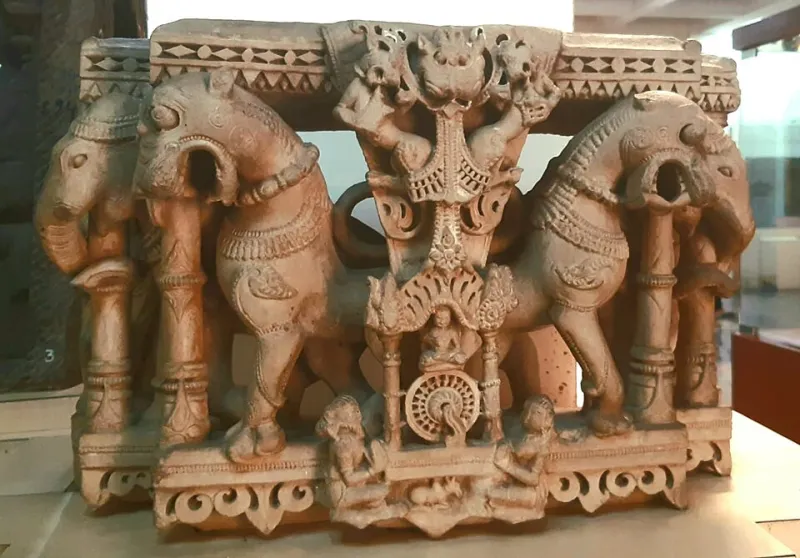
Photo: AmanAgrahari01, CC BY-SA 4.0, via Wikimedia Commons
Walk through the South Asian galleries of any major American museum today, and you will likely encounter a familiar curatorial vocabulary: Chola bronzes, Mughal-era manuscripts, Gandharan sculpture. These are magnificent works, unquestionably. But step back and consider what is missing from that picture, and a different kind of conversation becomes necessary—one that institutions across the United States are, at long last, beginning to have.
Indian folk art, decorative craft, and the material culture of everyday life have historically occupied a subordinate position in Western collections. They have been exhibited as ethnographic curiosities rather than aesthetic achievements, or omitted entirely from galleries that reserved their wall space for objects deemed sufficiently "fine" by standards that were, themselves, products of a particular cultural moment. That moment is passing. And the man who arguably anticipated its passing by nearly a century was a private collector in Pune whose name most American art lovers have never heard.
A Blueprint from the Past
Raja Dinkar Kelkar assembled his extraordinary collection of more than 21,000 objects across the early and mid-twentieth century, guided by a principle that now reads as remarkably prescient: that no meaningful distinction exists between the art made for kings and the art made for kitchens. His holdings encompass everything from ceremonial weapons and ivory carvings to oil lamps, betel-nut cutters, and shadow puppets—objects that would have been considered beneath the notice of most collectors of his era.
The museum that preserves his collection in Pune, India, has in recent years become a reference point for curators grappling with exactly the questions that American institutions are now confronting: How do we represent the full spectrum of a civilization's creative output? Whose objects have we systematically undervalued, and why? Kelkar's answer, embedded in every acquisition he made, was unambiguous: the decorative arts of everyday Indian life are not supplementary to the story of Indian civilization. They are central to it.
What American Curators Are Saying
The shift in institutional thinking is tangible, if still incomplete. Curators at several prominent American museums have noted a growing interest in expanding their South Asian holdings beyond the canonical categories that have long dominated acquisition strategies.
"There's been a real reckoning with the fact that our collections tell a very partial story," observed one curator of Asian art at a major East Coast institution, speaking on background. "When you look at something like the Kelkar collection and see the range of objects he thought worthy of preservation—the locks, the lamps, the writing instruments—it challenges you to ask why we ever decided those things didn't belong in a museum."
That question is gaining urgency as American audiences themselves become more diverse and more vocal about whose heritage is represented in public institutions. The Indian-American community, now numbering more than four million people, represents a constituency with both personal investment in seeing Indian cultural traditions honored and growing institutional influence to advocate for that recognition.
The Art Forms That Deserve Your Attention
For American art enthusiasts approaching Indian folk and decorative traditions for the first time, the range can feel overwhelming. A few specific areas offer particularly rewarding entry points.
Deepa lamps and ritual lighting objects represent one of the most visually striking and historically layered categories in the Kelkar collection. These oil lamps, produced in brass, bronze, and terracotta across different regional traditions, range from simple functional forms to elaborate sculptural compositions. Their variety reflects the extraordinary diversity of Indian religious and domestic practice, and their craftsmanship rewards close looking in ways that photographs rarely capture.
Betel-nut cutters, known as sarpech in some regional traditions, may seem an unlikely candidate for aesthetic appreciation, but the examples in the Kelkar collection argue otherwise. These small, handheld implements were crafted with a level of decorative ambition that transformed a utilitarian object into a vehicle for artistic expression. Figural carvings, inlaid metalwork, and regional stylistic variations make them a microcosm of Indian craft traditions more broadly.
Shadow puppetry traditions, particularly those from Andhra Pradesh and Karnataka, have attracted growing curatorial interest in recent years. The painted leather figures used in these performances combine narrative sophistication with visual boldness, and their presence in collections like Kelkar's underscores the extent to which performance and material culture are intertwined in Indian artistic traditions.
Textile arts, including resist-dyed fabrics and embroidered textiles from Gujarat and Rajasthan, have perhaps made the deepest inroads into American institutional collections, partly because their visual accessibility translates well across cultural contexts. But even here, the folk traditions have often been overshadowed by court textiles, and there remains significant work to be done in representing the full range of regional production.
Where to Engage with These Traditions in the US
For American audiences eager to move beyond the survey-level exposure that most encyclopedic museum collections provide, several pathways are worth pursuing.
The Smithsonian's Freer and Sackler Galleries in Washington, D.C., have made meaningful investments in expanding their South Asian holdings and offer educational programming that contextualizes their collections thoughtfully. The Philadelphia Museum of Art and the Los Angeles County Museum of Art both maintain significant Indian art collections that include decorative and folk objects alongside classical works.
Beyond physical institutions, the digital resources available through rajakelkarmuseum.com offer something that no American collection currently provides: immersive access to a collection built explicitly around the principle that folk and everyday objects deserve equal curatorial attention. Virtual tours, object essays, and contextual materials make the Kelkar collection accessible to audiences who cannot travel to Pune, and they provide a genuinely distinctive perspective on what Indian material culture looks like when viewed through a non-hierarchical lens.
For those seeking hands-on engagement, cultural festivals organized by Indian-American community organizations in cities including New York, Chicago, Houston, and the San Francisco Bay Area frequently feature demonstrations of traditional craft practices—weaving, metalwork, pottery—that connect living traditions to the historical objects preserved in collections like Kelkar's.
The Argument for Expanding the Canon
The growing American institutional interest in Indian folk and decorative arts is not simply a matter of filling gaps in existing collections. It reflects a deeper shift in how museums understand their purpose. The encyclopedic model—the idea that a great museum should represent the highest achievements of world civilization—is giving way to something more inclusive and, arguably, more honest: the recognition that a civilization's greatness is expressed not only in its monuments but in the objects its ordinary people made and used with extraordinary care.
Raja Dinkar Kelkar understood that a century ago. The American museum world is catching up. And for art enthusiasts willing to look beyond the canonical, the rewards are considerable—a vast, underexplored tradition of craftsmanship, ingenuity, and beauty that has been waiting, patiently, for the recognition it deserves.