One Man's Mission: How a Passionate Collector Saved India's Vanishing Heritage Before It Was Too Late
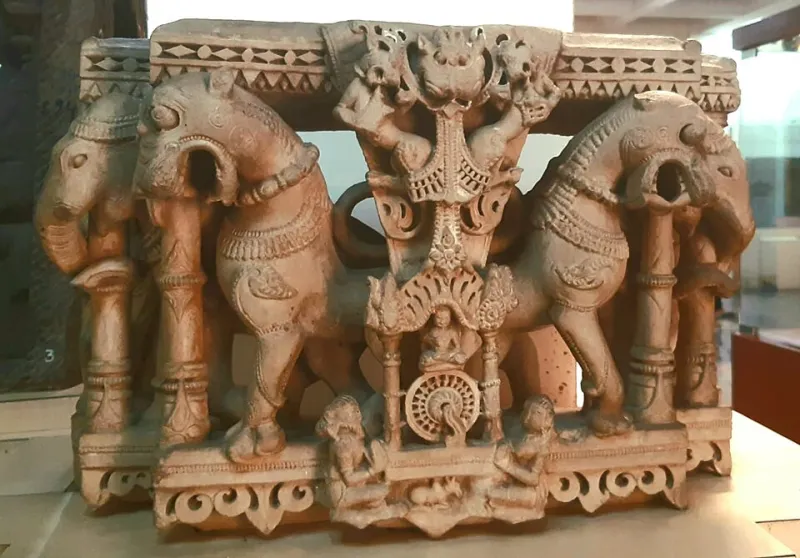
Photo: Archies2804, CC BY-SA 4.0, via Wikimedia Commons
In the early decades of the twentieth century, as colonial India struggled beneath the weight of political upheaval and rapid modernization, an enormous portion of the subcontinent's artistic heritage was quietly disappearing. Manuscripts rotted in monsoon-dampened attics. Sculptures were melted down or sold to foreign dealers for fractions of their cultural worth. Everyday objects—oil lamps, betel-nut cutters, writing instruments—were discarded as the remnants of a way of life that seemed destined for obsolescence. Into this precarious moment stepped one man whose obsession with preservation would ultimately save tens of thousands of artifacts for future generations.
Raja Dinkar Kelkar was not a government official, an academic archaeologist, or a wealthy industrialist with institutional backing. He was, in the truest sense, a private citizen driven by an almost fierce personal conviction: that India's artistic soul was worth fighting for, even if no one else was paying attention.
The Making of a Collector
Kelkar's journey began with grief. Following the death of his young son Raja, he channeled his sorrow into a singular, lifelong pursuit—assembling a collection vast enough to honor the boy's memory and, in doing so, honor the civilization that had shaped them both. What began as a personal tribute gradually evolved into something far grander: a systematic effort to document and preserve the material culture of an entire nation.
His approach was unconventional from the outset. While his contemporaries—both Indian and Western—focused their collecting energies on royal artifacts, temple sculptures, and objects with obvious monetary value, Kelkar cast a far wider net. He haunted village markets, corresponded with rural craftspeople, and negotiated with families who had little understanding of what their heirlooms might represent beyond immediate financial need. He was, in many respects, a cultural detective—following leads across regions, tracing the provenance of objects that had no formal documentation, and piecing together the story of Indian daily life from the fragments others had overlooked.
A Revolutionary Philosophy of Curation
Perhaps the most remarkable aspect of Kelkar's legacy is not the sheer volume of his collection—though 21,000 objects is a figure that commands respect—but the philosophy that guided every acquisition. At a time when the dominant museum model, both in India and in Western institutions, drew sharp distinctions between "high" and "low" art, Kelkar refused to accept that hierarchy.
For him, an intricately carved ivory betel-nut cutter deserved the same reverence as a royal sword. A hand-painted oil lamp used in a village household carried as much historical significance as a Mughal miniature painting. This democratic vision of material culture—one that placed folk art, craft traditions, and domestic objects on equal footing with aristocratic treasures—was nothing short of revolutionary for its era.
Modern curators, particularly those working in American institutions grappling with questions of inclusivity and representation, would recognize Kelkar's instincts as strikingly contemporary. His collection effectively argued, decades before the academic discourse caught up, that a civilization's identity is encoded not only in its monuments and masterworks but in the objects its people touched every single day.
The Artifacts That Almost Disappeared
To understand the urgency of Kelkar's mission, it is worth considering what was at stake. Colonial-era India witnessed an accelerated drain of cultural objects—some acquired through legitimate purchase, others through circumstances that were considerably less equitable. Rare Sanskrit manuscripts, many of them unique copies of texts with no surviving duplicates, were particularly vulnerable. Kelkar pursued these with particular tenacity, understanding that a lost manuscript represented not merely a missing object but an irretrievable body of knowledge.
Sculptures presented a different kind of challenge. Stripped from temples during periods of political instability, many found their way into private hands or onto the international antiquities market. Kelkar's ability to intercept some of these pieces before they vanished into foreign collections was a function of his extraordinary network of contacts and his willingness to spend resources that, by any conventional measure, he could not comfortably afford.
The collection he ultimately assembled encompasses an almost bewildering range: weapons, textiles, writing instruments, musical instruments, kitchen utensils, decorative lamps known as deepas, shadow puppets, ivory carvings, and locks of astonishing mechanical complexity. Each category tells a different story about the people who made and used these objects, and together they constitute a portrait of Indian civilization that no single monument or artwork could convey alone.
Why His Legacy Matters Now
The museum that now bears Kelkar's name in Pune, India, stands as a testament to what individual determination can accomplish when it is guided by genuine love rather than commercial ambition. For American visitors—whether they encounter the collection in person or through digital resources—it offers something that even the most generously funded institutional collections often struggle to provide: intimacy.
Because Kelkar gathered these objects himself, negotiating for them, researching them, and in many cases physically transporting them, the collection carries a human warmth that distinguishes it from acquisitions made through auction houses or government mandates. You sense, moving through these galleries, that every object was chosen by someone who cared deeply about what it represented.
That spirit of personal engagement is, arguably, the most important lesson Kelkar's story offers to contemporary museum practice. At a moment when institutions worldwide are reconsidering whose stories they tell and whose objects they preserve, his example suggests that the most transformative acts of cultural stewardship often begin not with policy or funding, but with a single person's refusal to look away.
Visiting and Experiencing the Collection
For those in the United States who wish to engage with Kelkar's collection, the museum's digital presence at rajakelkarmuseum.com offers an accessible starting point. Virtual tours, curated object spotlights, and contextual essays provide a meaningful introduction to the breadth of the holdings. For those planning travel to India, the museum in Pune remains one of the most rewarding cultural destinations on the subcontinent—a place where the scale of one man's vision becomes fully, and movingly, apparent.
What Raja Dinkar Kelkar understood, long before the language of cultural preservation entered mainstream discourse, is that heritage does not preserve itself. It requires advocates—people willing to do the unglamorous, painstaking work of finding, documenting, and safeguarding the objects through which a civilization knows itself. His collection is not merely a museum. It is an argument, made in tens of thousands of artifacts, for the irreplaceable value of what might otherwise have been lost.