Between Two Worlds: How the Objects at Raja Kelkar Museum Reveal India's Ongoing Search for Itself

Photo: Bureau of Land Management, CC BY 2.0, via Wikimedia Commons
There is a particular kind of institution that functions less like a repository and more like a conversation — one in which the past speaks directly to the present, and the present is forced to listen. Raja Kelkar Museum in Pune, India, is precisely that kind of place. Founded on the extraordinary private collection of Dinkar Kelkar, who spent decades rescuing objects from the margins of Indian domestic life, the museum now holds nearly 36,000 artifacts spanning centuries of craft, ritual, utility, and artistry. Together, they form something that no single academic text could replicate: a portrait of a culture in perpetual, graceful, sometimes agonizing negotiation with itself.
For American audiences, this may sound like a story that belongs to someone else. It does not.
The Weight of What We Keep
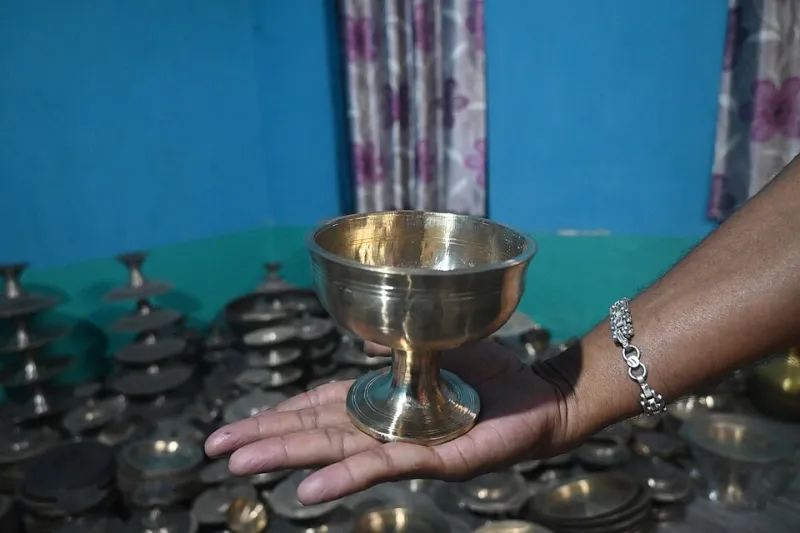
In the United States, debates about cultural identity tend to surface in predictable arenas — political platforms, university curricula, public monuments. What is less commonly examined is how the objects people choose to preserve reveal far more about a society's self-understanding than any policy statement ever could. Dinkar Kelkar understood this intuitively. He did not collect with the detached precision of an academic cataloguer. He collected as a man who believed that the everyday object — the oil lamp used by a grandmother, the betel-nut cutter passed between generations, the ink pot that once sat on a merchant's desk — carried within it the accumulated weight of a civilization's choices.
When those objects are gathered together under one roof, as they are at Raja Kelkar Museum, they stop being individual artifacts and begin functioning as an argument. The argument, stated plainly, is this: identity is not declared. It is accumulated, layer by layer, through the things a people make, use, and ultimately decide are worth saving.
Tradition as Both Anchor and Burden
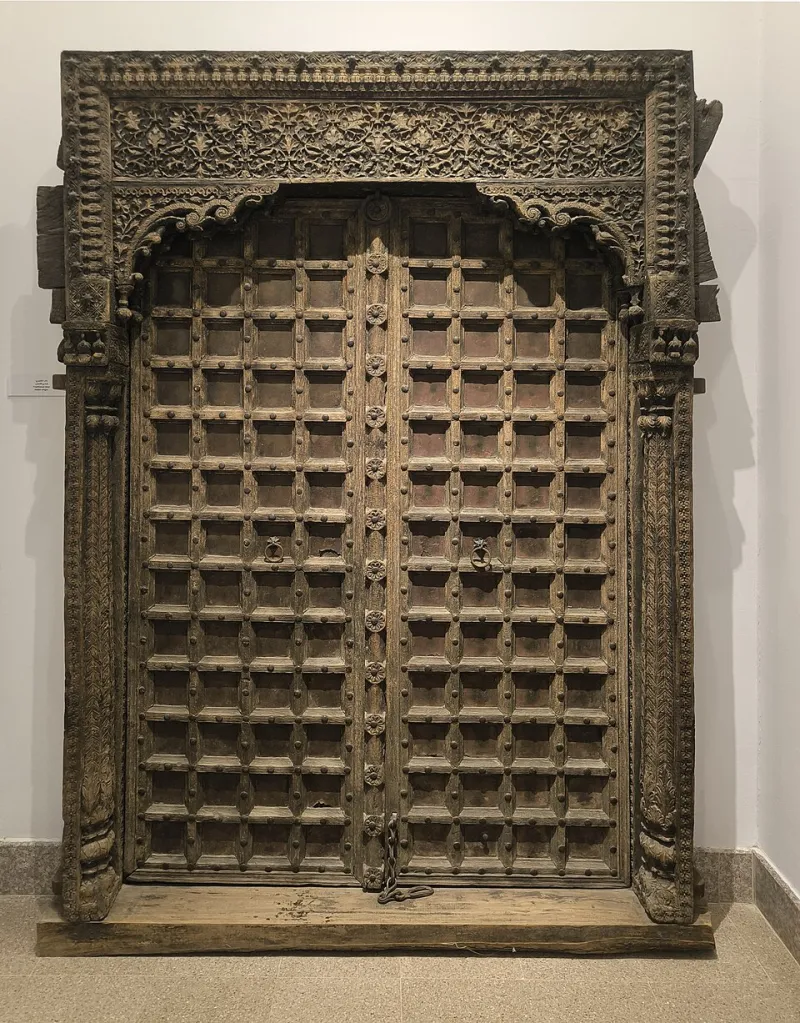
Perhaps no section of the museum makes this tension more legible than its collection of locks and keys — an assemblage so vast and varied that it has become one of the institution's defining features. At first glance, a lock is simply a lock. But within the context of Raja Kelkar's collection, these objects reveal something more complex. Many of the locks on display were crafted with extraordinary decorative ambition: fashioned into the shapes of fish, horses, and elephants, inlaid with brass and silver, constructed with mechanical ingenuity that challenges modern assumptions about what pre-industrial Indian craftspeople were capable of.
These were not objects designed for pure security. They were designed to be beautiful, to communicate status, to reflect a worldview in which the functional and the sacred were not considered separate categories. For a contemporary Indian audience, encountering these objects can be disorienting — a reminder of a sophistication that the colonial period systematically devalued and that rapid industrialization has further eroded. For an American audience, the parallel is not difficult to locate. Consider the handcrafted wooden furniture of colonial New England, or the ironwork of pre-Civil War American craftsmen — traditions that industrial production rendered economically unviable and culturally marginal within a single generation.
What Modernity Asks Us to Forget
The tension between tradition and modernity is not, of course, unique to India. But what makes the Raja Kelkar collection particularly instructive is the specificity with which it documents the moment of rupture. Objects from the eighteenth and nineteenth centuries sit in proximity to those from the early twentieth, and the shift in aesthetic sensibility is palpable. Earlier pieces carry the confidence of a culture that knew, without question, what it valued. Later pieces — produced during and after the colonial period — begin to show the influence of external aesthetic systems, a subtle but unmistakable anxiety about whether Indian forms of beauty were legitimate on a global stage.
This is a question that contemporary India has not fully resolved. The country is simultaneously one of the world's fastest-growing technology economies and the custodian of craft traditions that predate most Western nations by millennia. The tension between those two realities surfaces constantly — in debates about what belongs in school curricula, in arguments about urban development near heritage sites, in the choices young Indians make about whether to pursue careers in traditional arts or technology sectors.
Raja Kelkar Museum does not resolve this tension. It does something more valuable: it holds the space open, allowing visitors to sit with the complexity rather than reaching for easy conclusions.
What American Audiences Bring to This Story
Americans are, by and large, a people who have a complicated relationship with the concept of cultural continuity. The national mythology tends to celebrate reinvention — the idea that identity is something you construct rather than inherit. This is, in many respects, a source of genuine strength. It is also, as any student of American cultural history knows, a story that has involved the systematic suppression of older traditions: Indigenous heritage, African American cultural forms, immigrant community practices that were expected to dissolve into a homogenous national identity.
In that context, the Raja Kelkar collection offers American visitors something they may not have anticipated finding in a Pune museum: recognition. The experience of watching a rich, layered cultural inheritance come under pressure from forces that prize efficiency over beauty, standardization over particularity, and newness over depth — that experience is not foreign to American audiences. It is, in many respects, a defining feature of American cultural history.
The difference is that Raja Kelkar Museum offers a model for how a society might respond to that pressure without surrendering to it. Dinkar Kelkar's act of collection was, at its core, an act of resistance — not the confrontational kind, but the patient, deliberate kind that says: these things matter, and I will spend my life proving it.
The Museum as Living Document
What distinguishes Raja Kelkar Museum from a conventional archive is the sense, present in every gallery, that these objects have not been placed behind glass in order to be removed from life. They have been placed there so that life — the life of a culture, a civilization, a continuous human story — can be more clearly seen.
For modern India, still navigating the complex inheritance of colonialism, the demands of globalization, and the pressures of rapid urbanization, the museum functions as a kind of stabilizing force. It says, quietly but insistently, that the question of who India is need not be answered by looking only forward. The answer is already here, encoded in the curve of a lamp, the mechanism of a lock, the pattern pressed into the surface of a betel-nut box.
For American visitors making the journey to Pune — or engaging with the museum's growing digital presence — the invitation is the same. Come not only to admire, but to question. Come not only to learn about India, but to learn something about the universal human struggle to hold on to what is meaningful while remaining open to what is necessary.
In that struggle, Raja Kelkar Museum has much to teach — and the lesson, it turns out, belongs to everyone.